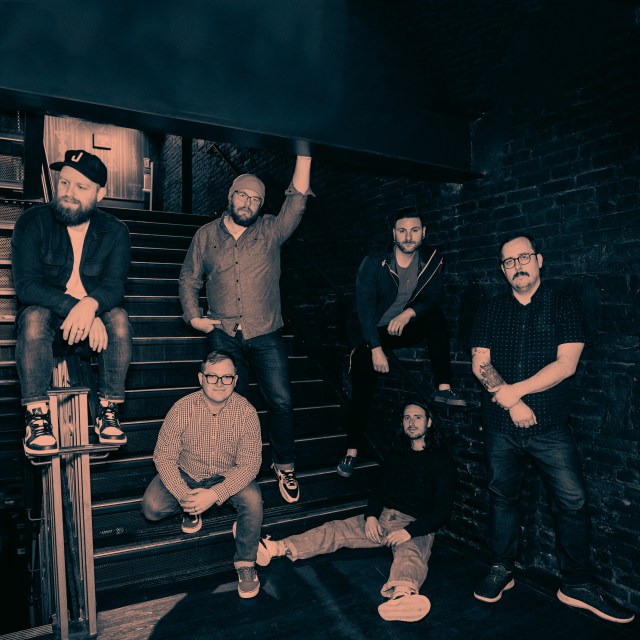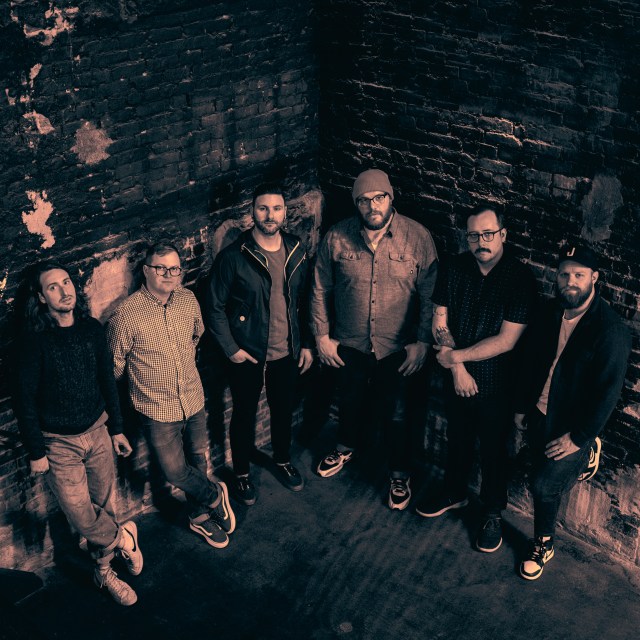
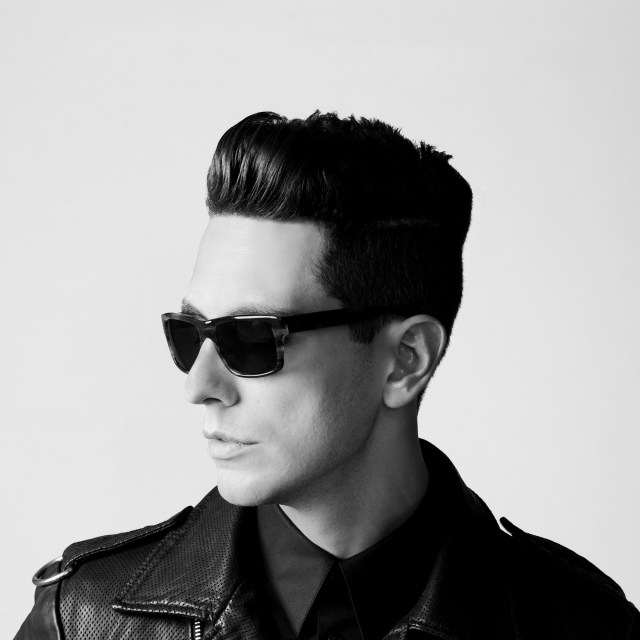
Back on His Own Terms: A Conversation With Cobra Starship

Just a few short years ago, Gabe Saporta was happy working on the industry side of things by leading the unique TAG Music label. After all, even while his projects like Midtown and Cobra Starship were in full swing, he still enjoyed managing bands and exploring other roles in the music industry.

But while TAG is still his day job, it’s far from the only focus for the East Coaster-turned-Angeleno these days. With both of his bands reuniting (Midtown in 2022 and Cobra Starship in 2024) for the occasional short tour, major festival stage or other one-off opportunity, Saporta’s already spending more time onstage in his 40s than he did during the entire decade prior.

Combine all of his musical endeavors with his recent efforts to revolutionize men’s skincare with his Brotege line, and Saporta can frequently be considered among the busiest guys in the business.

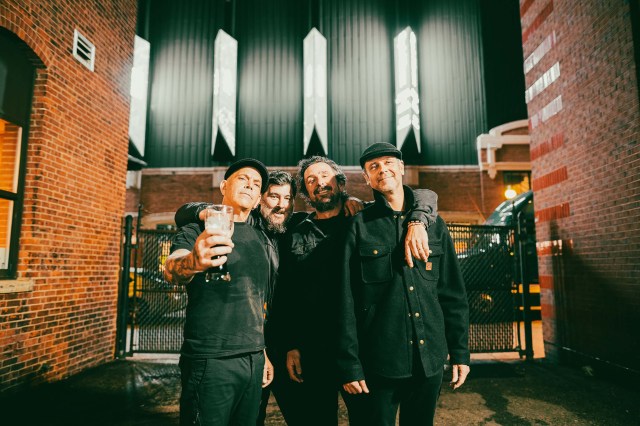
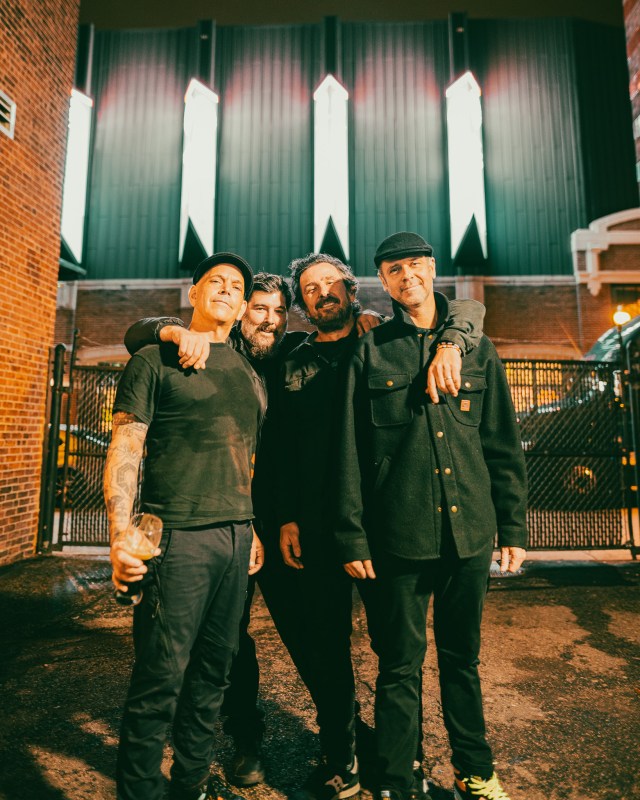
Hit Parader caught up with the towering frontman and mogul backstage to chat about the music, skincare, and everything in between.
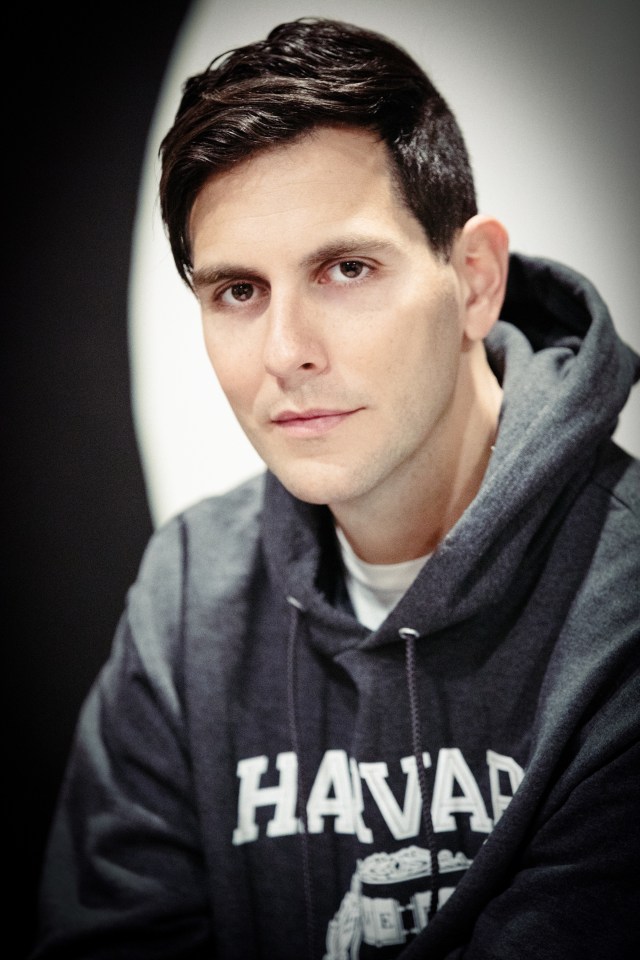

Photo: Press Provided

Hit Parader: After taking a decade off, what’s it been like to get back to performing with not one, but two bands?
Gabe Saporta: It’s been a lot — I’m not going to lie — especially because we’re not a fully operational thing. We’re not really touring. I’m not doing it full time. I’m still running my label. I just launched Brotege. So every time we do one of these shows, we’re revving the engine from zero. That can be a little bit daunting, but I’m also so grateful for the way we get to do it. One of the reasons why I stopped touring is because I wanted to have a family, and I don’t want to sacrifice my ability to do that for music. I did music for 15 years of my life, touring 10 months out of the year, almost every year. I didn’t want to have kids and then be away from them for that long, so I love the way that I get to do it now. I feel very grateful that we get to play these big festivals and get good slots. One of the things that touched me the most is how many young people I see out there. What gives a band longevity is having a new generation of kids coming in, and I see a lot of that with Cobra. I’m very excited about that and just thankful to everyone who’s listening.

HP: And with the bands being very different from each other — Midtown being more punk and Cobra being more pop…
GS: I was actually just talking about this before, but I just came across a Cobra fan — or maybe a Midtown fan, I don’t know — on TikTok, and she had a hot take about that. I don’t know if I agree with it, but she said that Cobra Starship is more punk rock than Midtown. Her thinking was that with Midtown, the lyrical content was very much part of the emo/post-hardcore emotional thing. It was always talking about relationships, the inner war, the struggles — everything on a very personal level. Whereas she said that Cobra Starship had a lot of societal critique in it, and that’s actually more of an attribute of punk rock than the personal lyrics Midtown had. (1:30) I don’t know if I agree with that, but I thought that was a hot take.

Photo: Bella Peterson

HP: …How are you going to balance the two going forward?
GS: I’m going to try to alternate years with them. We’re only doing Cobra this year, because there happens to be a lot of shows. I didn’t plan it this way, but we did Warped Tour, Riot Fest, and an Australia festival that unfortunately got in the way of a Midtown show I was planning to do. It’s really hard to schedule both, so if I can do one band one year, one the other year, that’s great. The goal for Midtown is to be able to at least do a great hometown show once a year. Cobra is obviously my bigger project, but Midtown was the project during my formative years as a high school kid, so it’s like your friends you make when you’re in high school. I don’t go to my high school reunion, I do Midtown shows to see all my friends again.

HP: How did it feel to come back — particularly with Cobra Starship — to bigger crowds than you played to the first time?
GS: Well, the last Cobra tour was opening for Justin Bieber in stadiums, so technically we played to 80,000 people in Chile, but there are more Cobra fans now. I think that’s the craziest part. Like at Warped Tour, they don’t tell you when you’re going to play or what stage you’re going to be on ahead of time, and we were literally the last band on Sunday. That could have been a death sentence for us. I was nervous about that, because I thought “Fuck, are people really going to stick around to see us? People are going to leave.” It was Ronnie Radke [with Falling in Reverse] and us as the last two bands when people are tired after a long weekend. But it was packed as far as the eye could see, and I was just so floored. It was just packed. (6:42) As far as the eye could see. I felt very lucky to have done that show and see all those people. Not only do people still give a shit about our music 10 years later, but it’s more people than ever. That’s probably the most rewarding thing any artist can hope for.

HP: Switching gears, what’s it been like to venture into skincare with Brotege?
GS: It’s been awesome, because it happened so organically. I had so many friends where once we got into our 30s, a lot of dudes start noticing that they’re getting older. There are tons of men’s products out there, but one is more confusing and expensive than the next, no one explains any of it, and it’s not really made in a way that’s talking to normal dudes. You have to be like a skincare sommelier to do it – even the word skincare makes me cringe. I felt like there was a real opportunity there, because people want to connect to brands that are coming from people like them. In the world we live in now, everything has become more democratized and niche-ified in a way, so you can really get something running pretty quickly. If you have that DIY ethos from the punk rock world, that’s also a quality you need to be an entrepreneur. And for me, it’s about more than the product. I want to build a community around Brotege to help dudes that don’t know what to do or where to start — and I want to do it in a fun way, so it doesn’t feel didactic and annoying.

Cobra Starship appears in our “What Does Punk Mean To You?”
article in Issue #1 of Hit Parader:
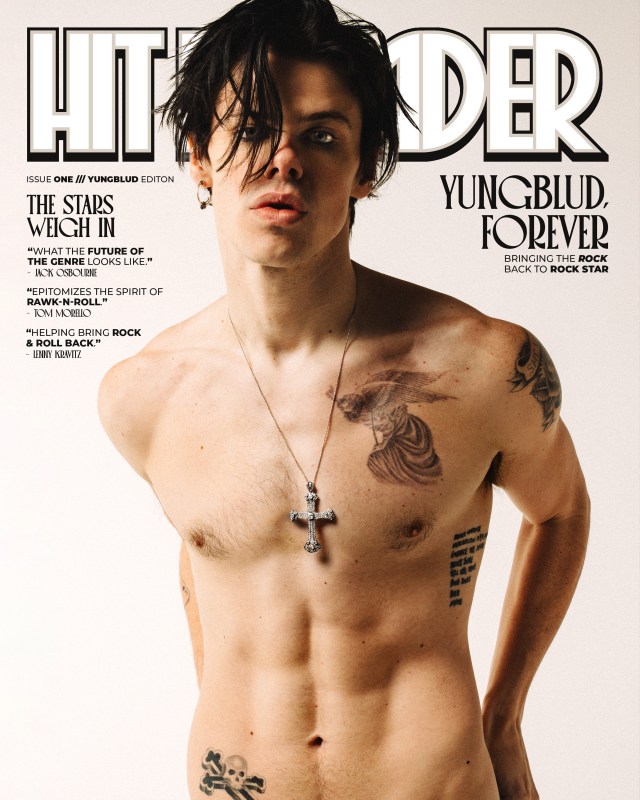
Hit Parader #1: Yungblud Edition

October 2025 — $12.99
YUNGBLUD is bringing the rock star back to rock. At just 27, the British firebrand stunned 45,000 fans and the world at Ozzy Osbourne’s farewell show with a jaw-dropping, emotional cover of “Changes.” Critics and legends alike are calling it one of the greatest live performances of the past 25 years. In a genre starved…

Generations of Dissent: A Conversation With Bad Religion

Bad Religion has been synonymous with punk rock for more than four decades now, yet the Los Angeles legends are still in pursuit of their perfect album.

With 17 albums across 37 years, most of the band’s supporters would say that at one point or another, the genre’s most thoughtful group hit perfection at least once or twice, but it’s the constant striving for greatness that has kept them together and relevant all these years later. 

Hit Parader caught up with founding bassist Jay Bentley and drummer Jamie Miller backstage to chat about the band’s legacy, logo, and goals for the future.


Photo: Jim Wright

Hit Parader: What is it about punk rock that makes it so multi-generational, where bands that you looked up to can play on the same shows as bands that look up to you?
Jay Bentley: Isn’t that how it’s supposed to be? That’s what a music scene should develop into. The most surprising part to me is the viability of this music as mainstream, which up until the ‘90s didn’t exist. Whether it was the advent of MTV or the success of Nirvana or the Vans Warped Tour, those things brought this culture out into the light and validated a lot of bands who had more to offer artistically than just a rock ‘n’ roll ethereal lifestyle with smoke and clouds and drugs. This is more attuned to folk music, and folk music hasn’t gone anywhere for hundreds of years. It’s just as valid as it’s ever been. Philosophically, the music isn’t just offering teen angst, but a direction for your teen angst that we could all sort of touch — which set everyone apart from the untouchable rock ‘n’ roll thing that other bands were offering.

Jamie Miller: Bands are like bugs. They’re not supposed to have a long lifespan. Generations before us, bands started that loved the Beatles, but they never got to play with or see the Beatles. Being a band that’s been around that long, maybe we were like the Beatles to one of these new bands, and now we get to see what we inspire and they get to see us.

Photo: Press Provided

HP: What do you think has kept Bad Religion not just together but relevant at the forefront of the scene for so long?
Bentley: Tenacity times naivety. We’re too stupid to quit. I refuse to quit, and you can’t make us stop. We’ll go when we damn well feel like it.

Miller: That, and there’s never a shortage of things to write about. The punk thing is sort of a generational lifestyle thing, too. You get your skateboard at 13, your Black Flag shirt, your Bad Religion patch, and you’re a punker now. It becomes a thing and it just keeps perpetuating, which is amazing.

Bentley: It’s the logo. The entire intention of the logo was to piss off our parents. We didn’t have an audience. We just had our parents going “Will you shut up?” Brett [Gurewitz] still says he drew it as a joke, and now we’re stuck with it forever. It worked out unintentionally.

HP: It feels like a lot of things for Bad Religion have just worked out unintentionally for decades now.
Bentley: Everything that’s worked out for us, has worked out unintentionally. When Jamie came into the band, he was the right tool for the job. When Brian [Baker] came into the band, he was the right tool for the job. You mesh with people in ways that are so much deeper than just musical, and those are the things that keep the band relevant. We’re moving forward by being like-minded. We don’t have irreconcilable differences. We had those in 1983 — and again in 1994 — but that difference was our immaturity in dealing with success. We just couldn’t deal with all of these things happening, so we went our separate ways, came back together and said
“We’re not doing that again.”

Photo: Press Provided

HP: Speaking of meshing with each other, what’s it like working and creating new music with the same people all these years later?
Bentley: It’s like playing poker with your friends on Wednesday night or going bowling with the guys in a league.

Miller: Bad Religion is really just our bowling league. That’s really all it is.

Bentley: The logo looks great on a bowling ball, by the way. But that cool hang is what keeps it fun, and we all want to pursue the next great thing. People ask us “What’s the best record you’ve ever made?” and hopefully, it’s the next one. Otherwise, what’s the point of making it? We all have that same philosophy. It doesn’t matter what we did in the past. If we make another record, it better be the best fucking record we’ve ever made. 

HP: With such a huge discography and so many classic songs across different albums, how do you go about putting together a set list?
Bentley: It’s intimidating and liberating at the same time, because having all of those choices is really just a freedom that most bands will never understand. I’ve got 400 songs to choose from, and it scares the hell out of these guys when I show up with a set list.

Miller: I think there’s only been one time where he wrote a set list and I was like “I don’t even know what that song is. We’ve never practiced this!” He goes “It’s this song, you’ll figure it out. Just play a punk beat and there’s a 50-50 chance it’ll be right.” 

Bentley: That’s pretty much it for every song. It’s 50-50 that we’re all going to start on the same note, but I guarantee you by the time we get to the chorus, we’re all playing the song.

HP: All these years later, is there anything left that you want to do with Bad Religion?
Miller: We want to win “Best New Artist” for the Grammys after 45 years. There’s still a chance. There’s no rule that says we can’t.

Bentley: That’s my goal. We should win “Best New Artist” and get a “Lifetime Achievement” award on the same night.

Miller: Then we put out an instrumental song and go for “Best Instrumental Band” to sweep the Grammys.

Bad Religion appears in our “What Does Punk Mean To You?”
article in Issue #1 of Hit Parader:

Hit Parader #1: Yungblud Edition

October 2025 — $12.99
YUNGBLUD is bringing the rock star back to rock. At just 27, the British firebrand stunned 45,000 fans and the world at Ozzy Osbourne’s farewell show with a jaw-dropping, emotional cover of “Changes.” Critics and legends alike are calling it one of the greatest live performances of the past 25 years. In a genre starved…

Nothing Left to Prove: A Conversation With the Bouncing Souls

Since forming in 1989, the Bouncing Souls have been unapologetically doing things their own way.

The Jersey punks — centered around vocalist Greg Attonito, guitarist Pete Steinkopf, and bassist Bryan Kienlen — have released a dozen albums (including a handful that frequently end up on “Best of” lists) and toured the world for the vast majority of the last 35 years. And even as the music industry has shifted, the veterans have found their diehard fanbase and DIY approach relatively unscathed by changes that have sunk many lesser bands.

Hit Parader spoke with the three founding members about their iconic albums and finding the right balance.


Photo: Alex Ilyadis

Hit Parader: As a band that does a lot of album plays of different albums, how do you go about learning basically every song you’ve ever done over again?
Pete Steinkopf: A while ago, we did a run where we did eight records in eight cities — two per night for four nights. By the end of that, you could just name a song and it would be like “Boom, done.” It was a good feeling, but to keep that up would be insane.

Bryan Kienlen: We got to the point where we could play any song, so right after that, we had a festival in our hometown where we bought a bingo machine with the little ping pong balls. We wrote song names on every ball, and we had a guy on the side of the stage get a ball and show it to us between every song. That was the whole show for three days. 

Greg Attonito: It was a band game show. He would pick it, write it on a dry erase board and show it to the crowd. We didn’t know what was coming. The song before it would end, he would show us, and we’d be like “1, 2, 3, 4.” It was super fun, but you can’t do that unless you know all your songs.

Kienlen: There are a lot of people who have favorite songs that never get played. I know I do from other bands, and it’s really special to see them play it, so we’ll probably keep doing it.

HP: How different is it playing shows and making music now compared to when you were just starting?
Attonito: Your perspective on the world and life is so different. As a kid, everything’s way too important. You’re driven in a different way. Now, we’re just really grateful for every day. I know what 55 years looks like, and I know the preciousness of life. You can’t know that when you’re 25. Being able to do this now, it’s so special. 

Kienlen: Grateful is the perfect word. We didn’t expect to be here at 55, but since we’re still here, I’m so glad that we have this band. It’s still my rock.

Attonito: We go around the world and see 40-somethings bringing their teenage kids out. The impact is just “Wow!” This is all the gold at the end of the rainbow.

Photo: Alex Ilyadis

HP: The Bouncing Souls never had a single big hit, but instead a bunch of beloved songs spread across multiple albums. How do you build a setlist from that?
Attonito: A lot of comedy, actually.

Kienlen: Sometimes it can take two hours, and then we end up writing the same set list.

Steinkopf: We’re like “Let’s do something totally different than we’ve ever done!” and then we spend hours going in circles. By the end of it, we’re like “That looks just like the set list we played last year…” That’s what happens, man. We do it to ourselves.

Kienlen: There are like 10 or 15 songs that we have to play. They’re staple songs. Then we try to fill in the blanks, and those end up being all the same songs. 

Steinkopf: And then it starts the conversation of “Are there staple songs we have to play?” You can argue about that all day long. 

HP: In addition to the staple songs, you’re still putting out new material. How different is it to put out an album at this point versus a decade or three ago?
Attonito: I used to think I knew a little something about the music industry, but now I know I have no fucking idea anymore. We’re just doing what we’re doing, and I’m grateful that people are interested in putting out our records and listening to our music.

Kienlen: We’ve stopped banging our heads against the wall, where we would sit in a room together like “We’ve got to write these songs!” Now we just let it happen, and we’ve been writing a lot more in the studio. We take our time, and there’s no rush. We have enough fucking songs already, so if we’re doing another one, it’s got to be good. So we just spend more time to make sure that every one of them is good.

Steinkopf: Everything just flows so much more now.

Attonito: Creatively, we’re free of having agendas with writing certain types of songs, and that’s what makes it super fun. When it’s done, we put it out into the world and move on to the next one. We barely think about it beyond that. The industry has changed a lot, but we just get back on the road and play what we like. Our audience is amazing, and we’re able to still get out there and do the same thing every night.

Steinkopf: It’s nice not giving a shit or trying to control any of it.

HP: How do you balance the band with everyone’s other adult responsibilities these days?
Kienlen: We figured out that we can tour in our own way. We never go away for more than 10 days. Sometimes on paper it looks like a lot, but it’s not really because it’s spread out. 

Attonito: We still do 40-50 shows a year, but compared to the past, we were doing 9 months a year for 10 years. Towards the end of that time, we started to really get burned out, so starting to do other things made me a better Bouncing Soul. We need to do other stuff and have a life, and then when we come back, we’re refreshed. It’s pretty simple math.

Bouncing Souls appears in our “What Does Punk Mean To You?”
article in Issue #1 of Hit Parader:

Hit Parader #1: Yungblud Edition

October 2025 — $12.99
YUNGBLUD is bringing the rock star back to rock. At just 27, the British firebrand stunned 45,000 fans and the world at Ozzy Osbourne’s farewell show with a jaw-dropping, emotional cover of “Changes.” Critics and legends alike are calling it one of the greatest live performances of the past 25 years. In a genre starved…

Still Swinging: A Conversation With The Wonder Years

While so many bands from the late 2000s and early 2010s have left their mark on the younger bands of today, few have been as directly influential as the Wonder Years.

Rather than just being a musical inspiration, vocalist Dan Campbell and the rest of the alternative band have established themselves as the veteran band supporting the youth movement. From helping emerging bands break through via opening slots on major tours to answering questions and offering advice about the industry for anyone who needs it, the Wonder Years have found themselves partially responsible for the success of more than a few emo, pop-punk, and other alternative bands today.

Of course, that’s not to say that the Pennsylvania natives are slowing on their own career at all, as many consider 2022’s The Hum Goes on Forever to be among their best work.

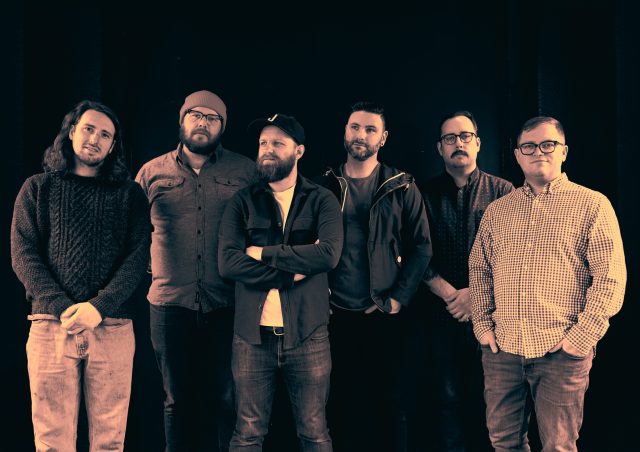
Hit Parader caught up with Campbell backstage to chat about the band’s impact on the next generation, unique fanbase, and more.


Photo: Kelly Mason

Hit Parader: The Wonder Years has really established itself as a band that supports the younger generation of artists. What made you take on that responsibility?
Dan Campbell: The way we look at our role in music right now is that we’re trying to put people on. The thing I’m proudest of for the Wonder Years is the fan base that we’ve curated and cultivated. The people that come to the shows are so kind and wonderful. They’re so thoughtful and forward-thinking, progressive and empathetic and fucking everything. So when bands come out to support us, they end up walking away with fans, because our fans want to listen and hear more art. We just try to make sure we’re putting people on. If we can give a leg up to a young band, we give them a chance. A lot of these kids call me “uncle,” which is funny, but also these kids — like Ryland [Heagy] from Origami Angel or Nathan [Hardy] from Microwave — hit me up like “Yo, how do we do taxes as a band?” I look at myself as a resource for younger bands, and I look at our role as trying to help shape the future of the genre through the people we help bring into it and give spotlight to.

HP: Speaking of genre, it feels like the Wonder Years appeals to everyone from the indie and emo kids to punk and hardcore fans. What do you think the key is to crossing those genre lines?
DC: I think the uniting thing behind our fan base isn’t genre, it’s ideology. It’s the way that people look at the world more than anything. All sorts of people come to the shows. I love the Mountain Goats so much and talk about it so much that we have a bunch of Mountain Goats fans that come to shows now. I was doing Aaron West [and the Roaring Twenties, Campbell’s other musical project] shows earlier this year, and the crowd was everyone from 17-year-old crustpunks in spiked jackets to double dates of couples in their late 50s or early 60s who came straight from work.

Photo: Kelly Mason

HP: How do you balance the nostalgia factor for playing classic Wonder Years songs with the urge to focus on newer material?
DC: It’s a fucking privilege to be a band so long that you can drop a new record and have your fans receive it as your best work to date, and then do a 10-year anniversary tour for a record that people say changed their lives. Having the option to flip back and do acoustic versions of songs and tour with a string section is a privilege.

HP: How different is it to put out a record these days as opposed to back in the 2000s?
DC: It’s exactly the same for me. The goal is to write songs that reshape the genre. I say this with the amount of humility you can say this with, and I know that’s not possible every time out, but I believe every band should put out a record that they think is the best record the genre has ever seen. You should be trying to raise the bar album over album. That’s my fucking goal. We always want to write a record that makes people think about the genre differently and expands what it can be. I want to write songs that people say, “That is my favorite song I’ve heard in my whole fucking life. That is a song I’m going to tattoo on my body forever.” That’s always been the goal, and nothing has ever changed about that.

HP: Are there any Wonder Years tattoos that stand out to you? 
DC: The ones that stand out the most are the people that have my face on them, because it just feels so fucking crazy to have a portrait of me on your body forever. That’s hard for me to comprehend, because that’s not the way that I look at myself. Most of the time, the lens through which I view myself is “Wyatt and Jack’s dad.” I’m at school drop-off. I’m coaching the baseball team. Then you go play a show, and someone’s like “Look, I have your face on my arm!” You’re like “What the fuck?! Did I just jump universes?”

HP: Do you have any goals left to accomplish with the Wonder Years?
DC: We have some bucket list venues. I’d love to do Red Rocks. I’d love to get a chance to play Madison Square Garden. I’d love to play anywhere in Africa, because it’s the only continent we haven’t played. I’d love to play Indonesia because it’s one of our highest listenerships, and we haven’t been able to make it there. And I want one song to go gold. A lot of bands recently have had viral moments that helped their songs go gold, and we aren’t really a band that does that on social media, but “Came Out Swinging” is not that far away. Everyone should listen to it 100 times while they sleep.

The Wonder Years appears in our “What Does Punk Mean To You?”
article in Issue #1 of Hit Parader:

Hit Parader #1: Yungblud Edition

October 2025 — $12.99
YUNGBLUD is bringing the rock star back to rock. At just 27, the British firebrand stunned 45,000 fans and the world at Ozzy Osbourne’s farewell show with a jaw-dropping, emotional cover of “Changes.” Critics and legends alike are calling it one of the greatest live performances of the past 25 years. In a genre starved…