
Ask one hundred artists their current favorite song or album they created and at least
95, and maybe more, will answer either the last one or the next one. Artists, by nature,
detest looking back. That is a universal rule among musicians, which makes the latest
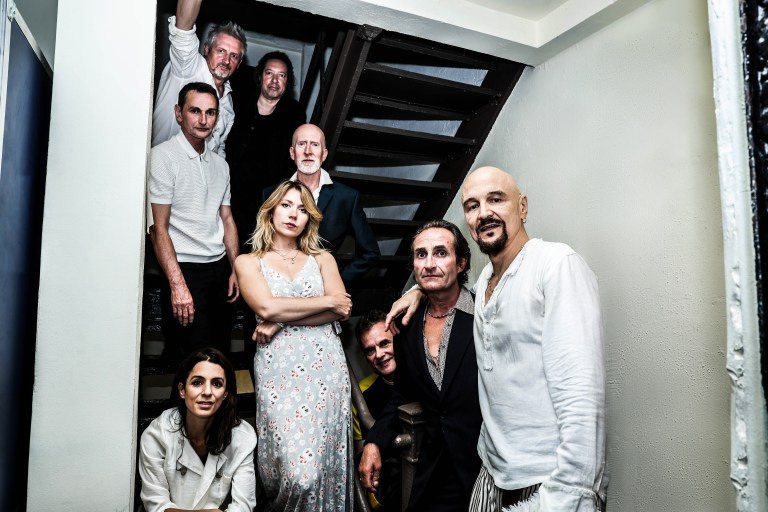
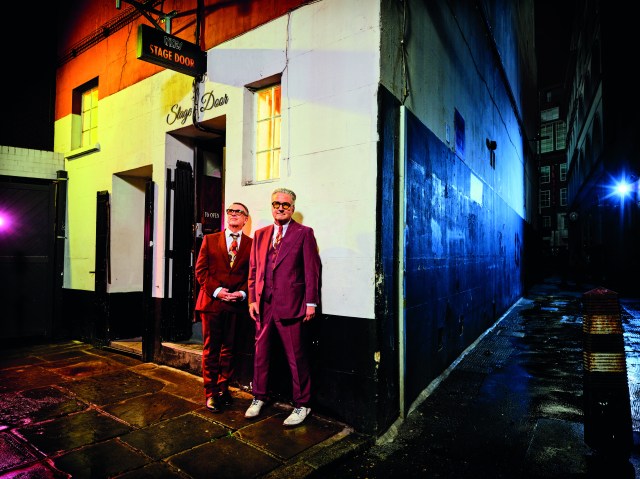
record by iconic British band Squeeze, the beloved duo of Glenn Tilbrook and Chris
Difford, such an anomaly.
When every other artist is focused squarely on the future, the pair went back to their
roots for the superb new album Trixies. A concept album about a fictional club, the
songs date back to 1974. The whole album was written then, but not recorded until
more than 50 years later.
We spoke, in separate interviews, with both partners of one of the most acclaimed
songwriting duos in British music, about revisiting the music half a century later, about
their summer tour, future plans and more.
Hit Parader: Were there songs on this record that surprised you at how true and relevant they still are 50 years later?
Glenn Tillbrook: Going back and examining the songs, the thing is, we always thought they were good. But I think the other thing about them is that they really sound like the time that they were written. They are so much a product of what our songwriting was at that time, which was just absorbing everything we were listening to and instantly regurgitating it back out again. It’s that process where it just happens by osmosis. You listen to all this great music. And what we did was to turn up versions of music that we liked.
HP: But, what’s so interesting about it is, for example, a song like “Don’t Go Out in the Dark” feels like it was written for these times. It’s amazing that a song written for a fictional club 50 years ago, because literally it’s a song that you would give to your kids today.
Tilbrook: Yeah, I can’t explain that. It works so well now, and it sounds contemporary, and yet it sounds like 1974 to me.
HP: When you look at these songs so many years later, can you see how these songs written at the beginning of your career influenced later songs you wrote?
Tilbrook: Can I just return to “Don’t Go Out in the Dark”? Because honestly, that’s the only song on Trixies that I sort of rewrote. And here’s why. Because the song, the vocal tune, we recorded it. I’ve got a guitar here. I’m just going to play it to you how it was. It was a little bit cliche, it’s like that’s all it is for the verse. So, we recorded it, and then the chorus. That’s all it was. I had the vocal tune, and I just thought, “I’m going to put different chords behind the vocals, just fool around with it,” and it sounded much nicer to make it. And then with the chorus opening out, the basic structure still was there, but I feel like on that song, we had a good producer who said, “Why don’t you try just a few different chords and it’ll really bring the song out?” all the other songs, we didn’t have to do that too. But it was such a pivotal moment to recognize, “OK, we can’t be absolute, this is exactly how it was. Because with that song, the tune is the same, but the chords are different.”
HP: I talk about this with people all the time. You write a song when you’re 20, and, of course, 50 years later, it’s a different song because you’ve had a whole life, and you bring associations to it. So, you were willing to put that new experience into it?
Tilbrook: Yes, totally. But really, it’s amazing that out of the 13 songs, that was the only one that really needed help. The thing about all of Trixies, we had Owen Biddle working on production, and I did some of that too. But we had all that experience to bring to the songs that we wrote, but we didn’t change the songs. Knowing how to arrange the instrumentation is where all the experience comes in.
HP: You guys just announced a killer show at the Hollywood Bowl here in LA. Are you guys excited to finally get to do Trixies live 50 years later?
Tilbrook: It’s so exciting to do that because we’re going to start rehearsing next week and trying to work out doing it all as one thing. We’ve never thought about doing that with any record before, but if any record deserves it, I think it’s this one. I’m a little nervous about what people will think, but I think we’ve got to, we’re going to at least try it out and see if it works and take it from there.
HP: Are there songs on this album you’re particularly excited to see how the audience responds to them live?
Tilbrook: Yeah, totally. We’ve been doing “You Get the Feeling” live and we’ve also done “Hell on Earth.” I’m really interested to do “Why Don’t You?” Because that’s a song that there’s not very much to it, but it’s very compelling for some reason. I think it’s an earworm in the best possible way and I think that’s the most 60s influenced pop plus a little bit of Sparks and I was obsessed with tangos at the time. The last tango song I wrote before abandoning that was “Take Me I’m Yours,” so that was hanging around for a few years.
HP: Are there songs you’ve written over the years that you’ve been surprised by how the audience responds to them? Like I spoke Graham Nash about “Our House” and Daryl Hall about “Sara Smile” for a book I wrote, and we discussed how they were such simple personal songs written about one person each that became anthems because everyone craved the feeling you get from those songs. So, have you felt that?
Tilbrook: That’s very complimentary. “Sara Smile,” for instance, is magic to me. The most charming, beguiling person you’ll ever meet is contained in that song. And what a mood to create. Graham Nash has been one of my biggest influences, the harmonies that I do. Half the time I imagine I’m Graham Nash and what would he do? All right, obvious question.
HP: What one Graham Nash song do you wish you had written and why?
Tilbrook: “Sleep Song,” from Songs for Beginners. Just such a beautiful, simple song. And he plays with melody over essentially a very simple chord structure. I’m sure you’ve heard from people over the years that you have the same effect on people who have been such fans of your songwriting.
HP: Are there artists you have heard from who you were surprised were fans?
Tilbrook: That’s a really easy question. I met Questlove, and he was obsessed with a song that we did for Argy Bargy called “What the Butler Saw.” And Questlove was obsessed with that song when he was a kid. And he said, “I’ve never heard a song like that.” I was so pleased that he liked it because I love that song. Not many people heard it because it was pushed off of Argy Bargy.

HP: Are you still enjoying it as much as you ever did?
Chris Difford: It’s a different kind of experience. When you’re young and you don’t have any fear and you’re in the back of a van touring around, you experience it from that angle. But when you’re older, I’m 72 this year, I’m taking it a little bit slower because I have to. And I have to respect that. My time here is limited in a way because my youth, if you like, has been and it isn’t here. When you’re young, you never think you’re going to reach 30. Then when you’re 30, you think you’re never going to reach 40. Then when you’re 72, you don’t know if you’re going to reach 80 or even 73. So, you’re aware of time a little more than you used to be.
HP: What’s the fruit down at the bottom that tastes good?
Difford: The new album and having people like Owen Biddle produce it. That’s the fruit that I feel very grateful for.
HP: There’s always been an audience for you and here in LA you’re playing the Hollywood Bowl, a venue The Beatles and The Doors played in.
Difford: Yeah, we played it before. I’m really looking forward to playing it, and I think it’s time that we play places like that. I think it’s about time that we came on to a bigger stage and performed Trixies and whatever else we’re going to do.
HP: Were you surprised by how well the record holds up?
Difford: Yeah, of course I am. And I’m very grateful for it. I think it sounds amazing. Everybody that was involved in the record has done a great job, all the musicians. I think it’s exactly how I dreamt it might be.
HP: Is it how you dreamt it might be when you started revisiting it? Or is it how you dreamt it would be in 1974 when you started it?
Difford: When we started rerecording it last year, really. In 1974 I had no idea what it would sound like and I’m extremely pleased that it sounds this good. But that’s because it’s been in very good hands. It’s a real steppingstone from the past into what might or might not be the future.
HP: Were there songs in particular that you were surprised that they felt, for lack of a better word, prophetic?
Difford: I had no expectations of any of the songs and what they would end up being
like. But when I sat in the room where they were being recorded with the band and
every beat and every time we got to a new song, I was thrilled. It just felt fresh and new, even though it was 50 years old.
HP: When you guys started rerecording it, did it feel like this was the right time?
Difford: It just did. We could put another album out full of songs, but there would just be another album full of songs. Everybody does that. Nobody does this. This is the first time I know of that a band has gone back to the beginning and created something as ambitious as this.
HP: When you do new material, it can put older songs into a new context. So, on this upcoming tour, are there songs that you’re really looking forward to revisiting?
Difford: That’s all to be discovered. I don’t really know what it’s going to be like. If I go and see a band and they perform 43 minutes of a record I’ve never heard before, I’m going to have to really think about it. But I remember going to see Elton John perform Captain Fantastic. That was a whole album that he played from beginning to end. It was such a brilliant, brilliant album. We’ll go on stage, we’ll perform it, it will sound good. And I’m hoping that the audience will be able to embrace the risk that we are taking.
HP: You say it’s a theatre piece. Since it is a whole concept, is it something you would ever want to see made into a theatrical piece or something else?
Difford: Yeah, completely. That would be a passion of mine, without a doubt, to see it, to hear it on stage as a play. I could retire just seeing that.
Squeeze’s new record Trixies is available everywhere through BMG and Love Records here.