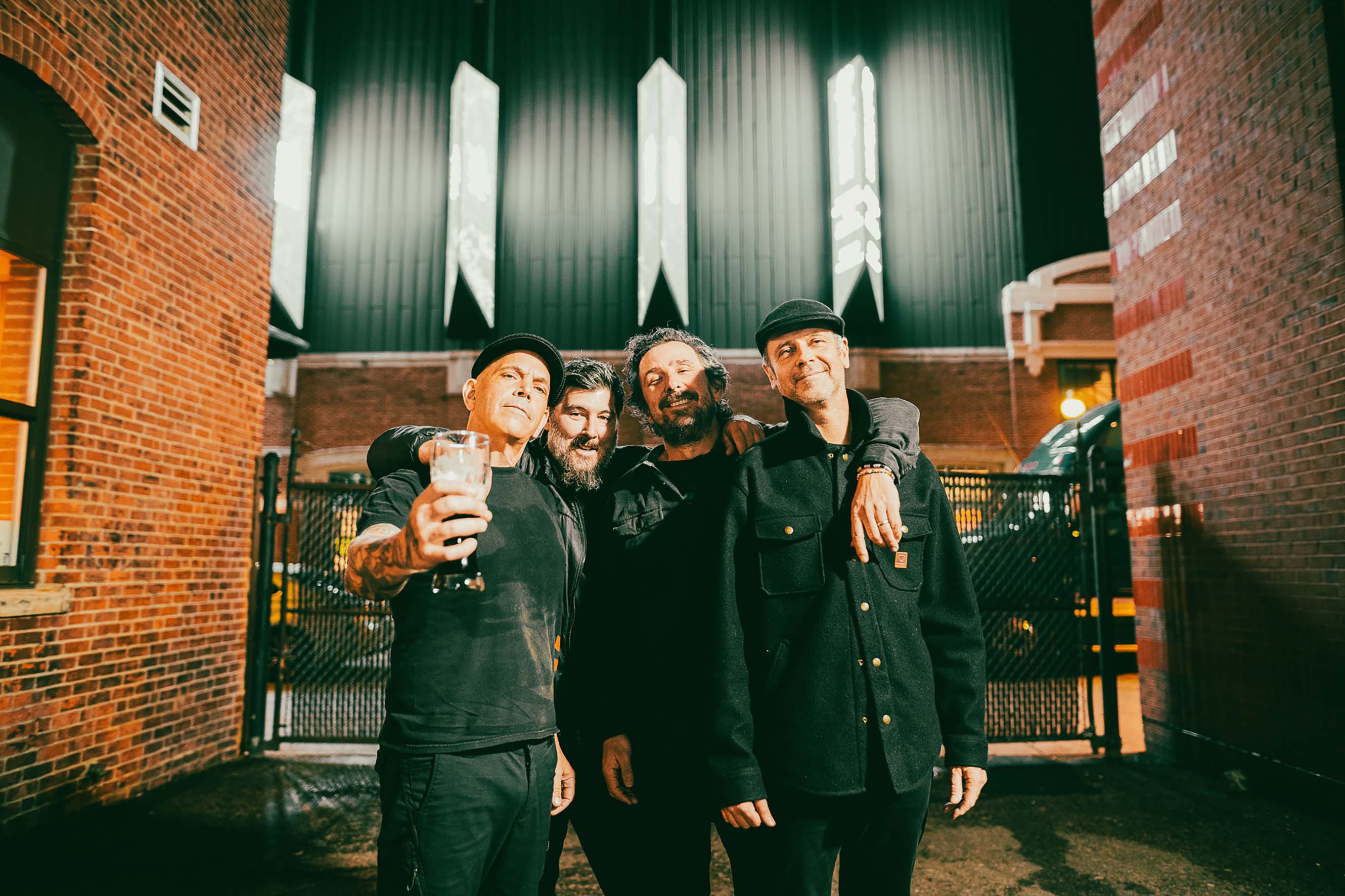
Since forming in 1989, the Bouncing Souls have been unapologetically doing things their own way.
The Jersey punks — centered around vocalist Greg Attonito, guitarist Pete Steinkopf, and bassist Bryan Kienlen — have released a dozen albums (including a handful that frequently end up on “Best of” lists) and toured the world for the vast majority of the last 35 years. And even as the music industry has shifted, the veterans have found their diehard fanbase and DIY approach relatively unscathed by changes that have sunk many lesser bands.
Hit Parader spoke with the three founding members about their iconic albums and finding the right balance.
Hit Parader: As a band that does a lot of album plays of different albums, how do you go about learning basically every song you’ve ever done over again?
Pete Steinkopf: A while ago, we did a run where we did eight records in eight cities — two per night for four nights. By the end of that, you could just name a song and it would be like “Boom, done.” It was a good feeling, but to keep that up would be insane.
Bryan Kienlen: We got to the point where we could play any song, so right after that, we had a festival in our hometown where we bought a bingo machine with the little ping pong balls. We wrote song names on every ball, and we had a guy on the side of the stage get a ball and show it to us between every song. That was the whole show for three days.
Greg Attonito: It was a band game show. He would pick it, write it on a dry erase board and show it to the crowd. We didn’t know what was coming. The song before it would end, he would show us, and we’d be like “1, 2, 3, 4.” It was super fun, but you can’t do that unless you know all your songs.
Kienlen: There are a lot of people who have favorite songs that never get played. I know I do from other bands, and it’s really special to see them play it, so we’ll probably keep doing it.
HP: How different is it playing shows and making music now compared to when you were just starting?
Attonito: Your perspective on the world and life is so different. As a kid, everything’s way too important. You’re driven in a different way. Now, we’re just really grateful for every day. I know what 55 years looks like, and I know the preciousness of life. You can’t know that when you’re 25. Being able to do this now, it’s so special.
Kienlen: Grateful is the perfect word. We didn’t expect to be here at 55, but since we’re still here, I’m so glad that we have this band. It’s still my rock.
Attonito: We go around the world and see 40-somethings bringing their teenage kids out. The impact is just “Wow!” This is all the gold at the end of the rainbow.
HP: The Bouncing Souls never had a single big hit, but instead a bunch of beloved songs spread across multiple albums. How do you build a setlist from that?
Attonito: A lot of comedy, actually.
Kienlen: Sometimes it can take two hours, and then we end up writing the same set list.
Steinkopf: We’re like “Let’s do something totally different than we’ve ever done!” and then we spend hours going in circles. By the end of it, we’re like “That looks just like the set list we played last year…” That’s what happens, man. We do it to ourselves.
Kienlen: There are like 10 or 15 songs that we have to play. They’re staple songs. Then we try to fill in the blanks, and those end up being all the same songs.
Steinkopf: And then it starts the conversation of “Are there staple songs we have to play?” You can argue about that all day long.
HP: In addition to the staple songs, you’re still putting out new material. How different is it to put out an album at this point versus a decade or three ago?
Attonito: I used to think I knew a little something about the music industry, but now I know I have no fucking idea anymore. We’re just doing what we’re doing, and I’m grateful that people are interested in putting out our records and listening to our music.
Kienlen: We’ve stopped banging our heads against the wall, where we would sit in a room together like “We’ve got to write these songs!” Now we just let it happen, and we’ve been writing a lot more in the studio. We take our time, and there’s no rush. We have enough fucking songs already, so if we’re doing another one, it’s got to be good. So we just spend more time to make sure that every one of them is good.
Steinkopf: Everything just flows so much more now.
Attonito: Creatively, we’re free of having agendas with writing certain types of songs, and that’s what makes it super fun. When it’s done, we put it out into the world and move on to the next one. We barely think about it beyond that. The industry has changed a lot, but we just get back on the road and play what we like. Our audience is amazing, and we’re able to still get out there and do the same thing every night.
Steinkopf: It’s nice not giving a shit or trying to control any of it.
HP: How do you balance the band with everyone’s other adult responsibilities these days?
Kienlen: We figured out that we can tour in our own way. We never go away for more than 10 days. Sometimes on paper it looks like a lot, but it’s not really because it’s spread out.
Attonito: We still do 40-50 shows a year, but compared to the past, we were doing 9 months a year for 10 years. Towards the end of that time, we started to really get burned out, so starting to do other things made me a better Bouncing Soul. We need to do other stuff and have a life, and then when we come back, we’re refreshed. It’s pretty simple math.
Bouncing Souls appears in our “What Does Punk Mean To You?”
article in Issue #1 of Hit Parader:
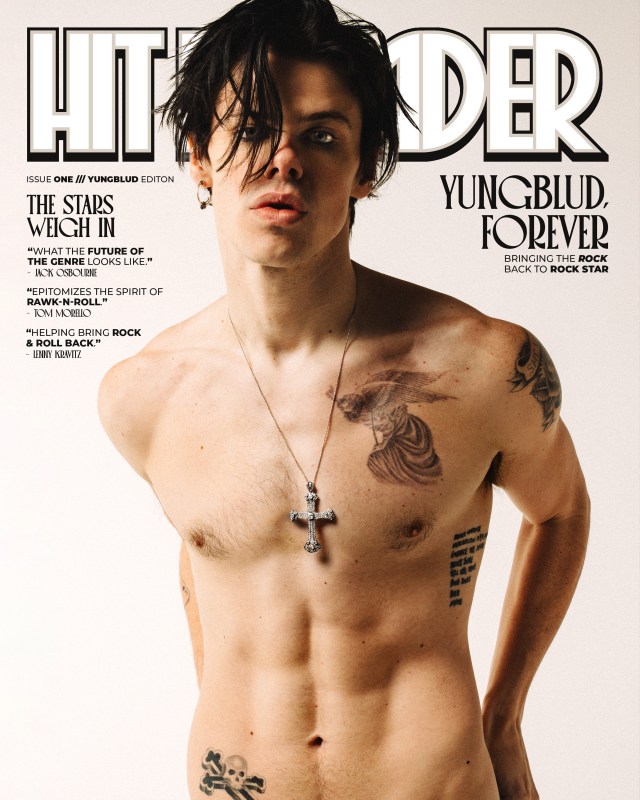
Hit Parader #1: Yungblud Edition
October 2025 — $12.99