Emerging as the alternative metal band from the ‘90s NYC scene, Helmet has always found its way as a unique icon of the hard rock world regardless of genre or other labels.
Across nine albums and countless tours, festivals and other massive shows, singer/guitarist Page Hamilton and his band have left a mark on anyone and everyone who was looking for something a little “different” in the rock world.
Hit Parader spoke with Hamilton backstage in Chicago to chat about the band’s history, legacy, and what’s next.
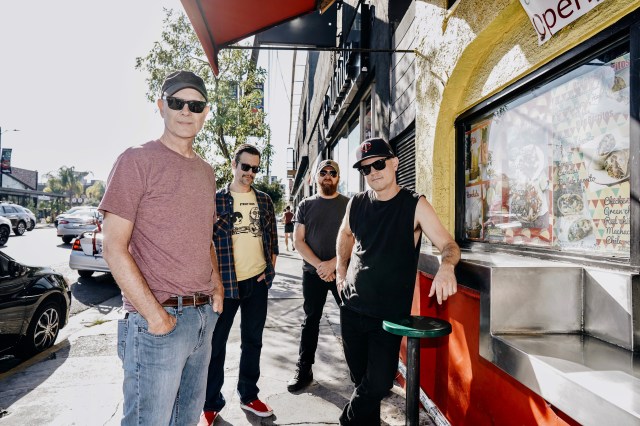
Hit Parader: After coming up in the New York City scene of the ‘90s, what’s it like to look back on that era now?
Page Hamilton: It was amazing. I think about interviews that John Stanier — my original drummer — and I had done, and people would ask us “Is there a scene in New York?” and we’d say “Nah.” But looking back now, it was an amazing scene. There were so many bands that were our brothers and sisters, like Surgery, the Honeymoon Killers, Das Damen and Skunk, and bands from all over New Jersey, New York and Connecticut would come in to play places like CBGB. We actually auditioned at CBGB. I went in there with a four-song demo tape when Louise Parnassus and Hilly Krisstal were just sitting there. I remember when Kim Deal or Frank Black would be in town and they would be hanging out at CBGB. There was another place called Max Fish where we ran into Gibby [Haynes] from Butthole Surfers one night with Scott [Weiland] from Stone Temple Pilots, who was opening for the Butthole Surfers. There was a great community in the Lower East Side and East Village at least. It was a fun time.
HP: Helmet has really floated between subgenres in the hard rock world for so long, what’s it like to play some of these giant festivals with such a wide range of acts?
PH: I love it. We’ve always felt like the awkward stepchild. We’ve played metal festivals with Motley Crue, Black Sabbath and Marilyn Manson, and we also played the Warped Tour when it was more emo and screamo bands like Thursday, Blink-182 and that whole world. I remember [Warped Tour leadership saying they were] standing in the crowd and seeing two 16-year-old boys watching us like “Wow, what is this? This is different but it’s amazing!” They didn’t know us at all, but they were into it. And I love bands like the Buzzcocks and the Sex Pistols and some of the punkier stuff. My old drummer hated it, but I fucking think they’re great songs.
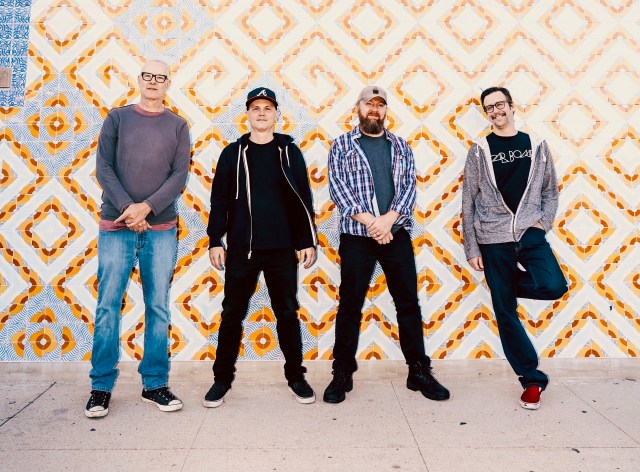
HP: Having been in Helmet for 36 years now, how different does it feel at this point of your life as opposed to the early years?
PH: I feel very secure in my place in music as a singer, songwriter and guitar player now. I don’t have a guitar-shaped pool at my mansion in the hills or anything like that, but that was never my goal. My goal was to make music that I believed in and could be honest singing, and we still do that. My band has now been together with this current drummer for 20 years, and my bassist is the “new guy” for the last 15 years. I love them like little brothers. They were teenagers when Helmet came out. Being a rock star could last you two years, or — if you’re lucky — it could maybe last a lifetime. If you want to be a rock star, then don’t take any advice that I have for you, but if you want to be a musician that will never, ever, ever fade away, that’s what I want. You wake up and you play music. You play your guitar, you sing, you write songs. You do something because you have to be honest about it. I’ve always been honest about what I do. I’ve never wanted to be a rock star, I just wanted to be a musician. I’ve been so lucky to make a living doing what I love.
HP: Speaking of your songwriting, how different is that process for you now as opposed to three decades ago?
PH: I know so much more now, and I feel like when I sit down to write, I still have a lot of the same techniques. I always surround myself with books of poetry and everyone from Ezra Pound to E.E. Cummings and Sylvia Plath to William Butler Yeats. I still open books and read a line to get an idea from that or from personal experience. A lot of stuff from TV commercials and the consumer culture that we are part of as capitalists always inspires me to write some stuff. I’m also more confident in my singing now than I was back then. Back then I had two styles, I could sing in this range of about an octave and I could scream and belt out stuff really hard. Now, I feel like I have more like a three-octave range. I found my zone as a baritone. I know that and I love it. It’s still about developing a musical idea, not just stringing a bunch of riffs together.
HP: What’s it like to play with these major artists who were inspired by you?
PH: It’s cool. I’m totally honored and flattered that I’ve gotten to hear Chino [Moreno, from Deftones] say “These lyrics inspired me” or Dimebag [Darrell] from Pantera say “I told you that you’d influence me,” or Serj [Tankian] from System of a Down say his brother and he were huge fans and we had a big impact on them. It makes you feel like you’re doing something right.
After 36 years, what’s left for Helmet to do?
PH: I don’t know. We put out an album, Left, about two years ago, so maybe we’ll do another album. We’ll definitely continue to tour, but a lot less intensely than we did back then. I have other musical projects that I need to do, and I like being home with my girlfriend now. I don’t want to tour for 18 months at a time anymore now that I’m old enough to be on Medicare.
Helmet appears in our “What Does Punk Mean To You?”
article in Issue #1 of Hit Parader:
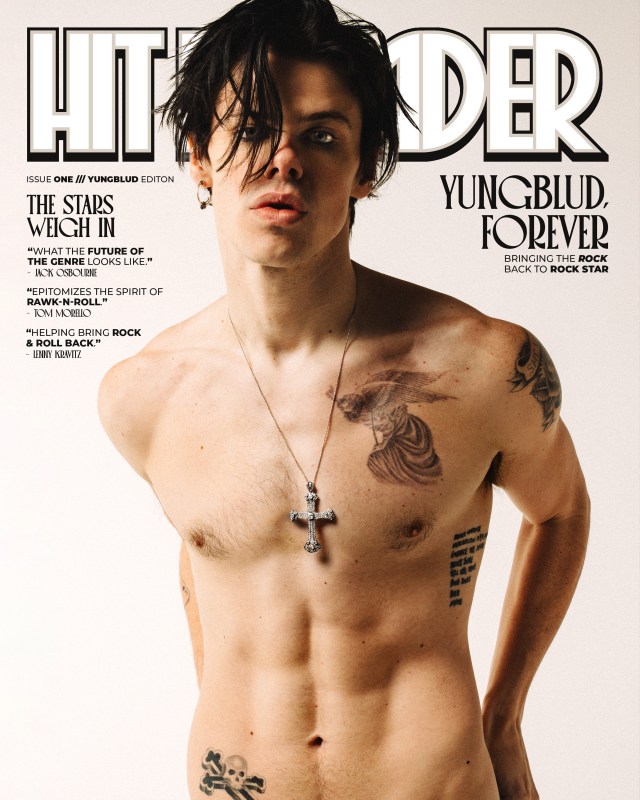
Hit Parader #1: Yungblud Edition
October 2025 — $12.99