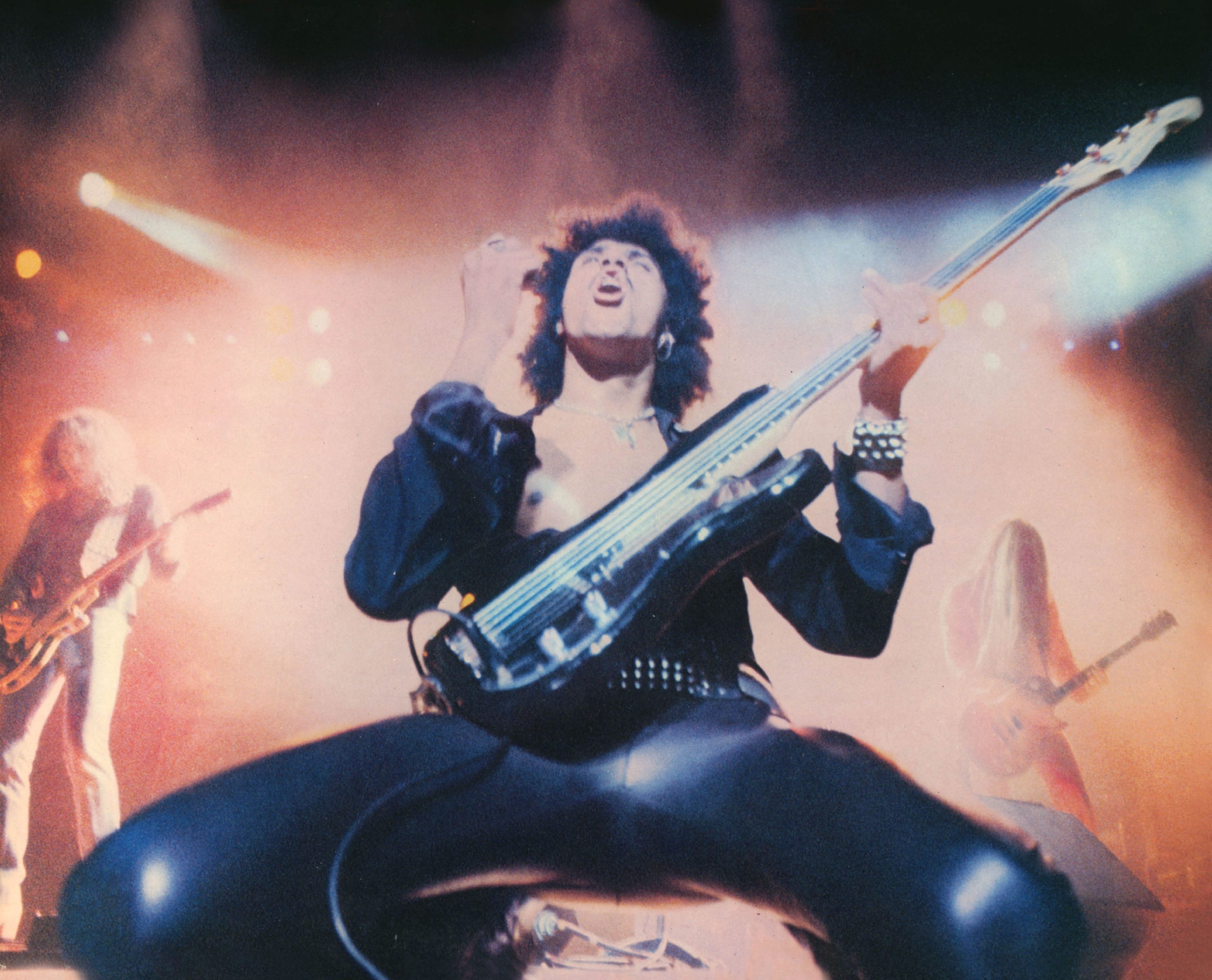
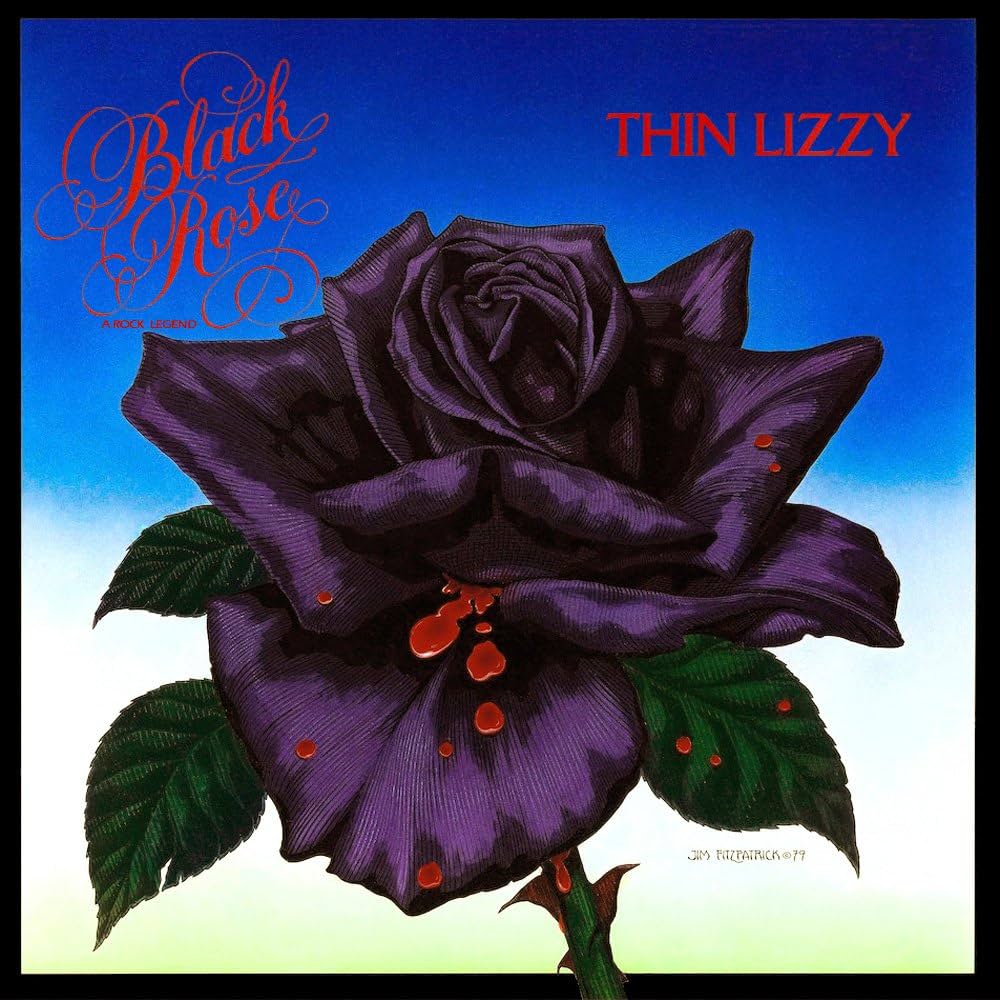
When, at the beginning of Thin Lizzy’s 1979 album Black Rose, Phil Lynott tells you to “Do Anything You Want To,” you get the sense that he knows what he’s talking about. There’s conviction in his voice, a knowing, a telling: “You can do anything you want to, because that’s what I do.”
Indeed, who did what they wanted to do in life more than Phil Lynott – and who knew better about the “people who investigate you … insinuate, intimidate, and complicate you”? Lynott’s path, on paper, was certainly different from any other popular music pioneer of his time: he was a half-Black Irish Catholic born in England and raised in the whiter-than-white Dublin of the fifties and sixties. He was born the year his country was made a republic and wouldn’t live to see the dissolution of the Troubles. Let me put this into context – in the scope of Irish history, he’s preceded by one other successful Black Irish musician: Rachel Baptist, an opera singer who performed two centuries before Lynott was born.
If you find yourself realizing that you don’t know much about Phil Lynott or Thin Lizzy, I don’t fault you. We Irish-Americans like to joke about that muscle of emotional repression we so often exercise, but I’ve found that our paralyzing inability to talk about the uncomfortable things in life has led to an unfortunate ignorance of Ireland herself. I’m Irish-Catholic from Chicago born just after the Troubles, and never in all my years of parochial education was that era of Irish history recognized in the curriculum, let alone the legacy of 700 years of English colonization. I didn’t realize why my family had migrated to the US around 1850, or why we didn’t speak a lick of the Irish language, or why it was unthinkable that we would attend a Protestant service in lieu of Sunday mass. It was only when I fell in love with James Joyce as an undergraduate (a mandatory fling for many English majors) that I began to unfold the history of my own heritage, and the more I learned, the more baffled I was at all I’d missed living across the pond.
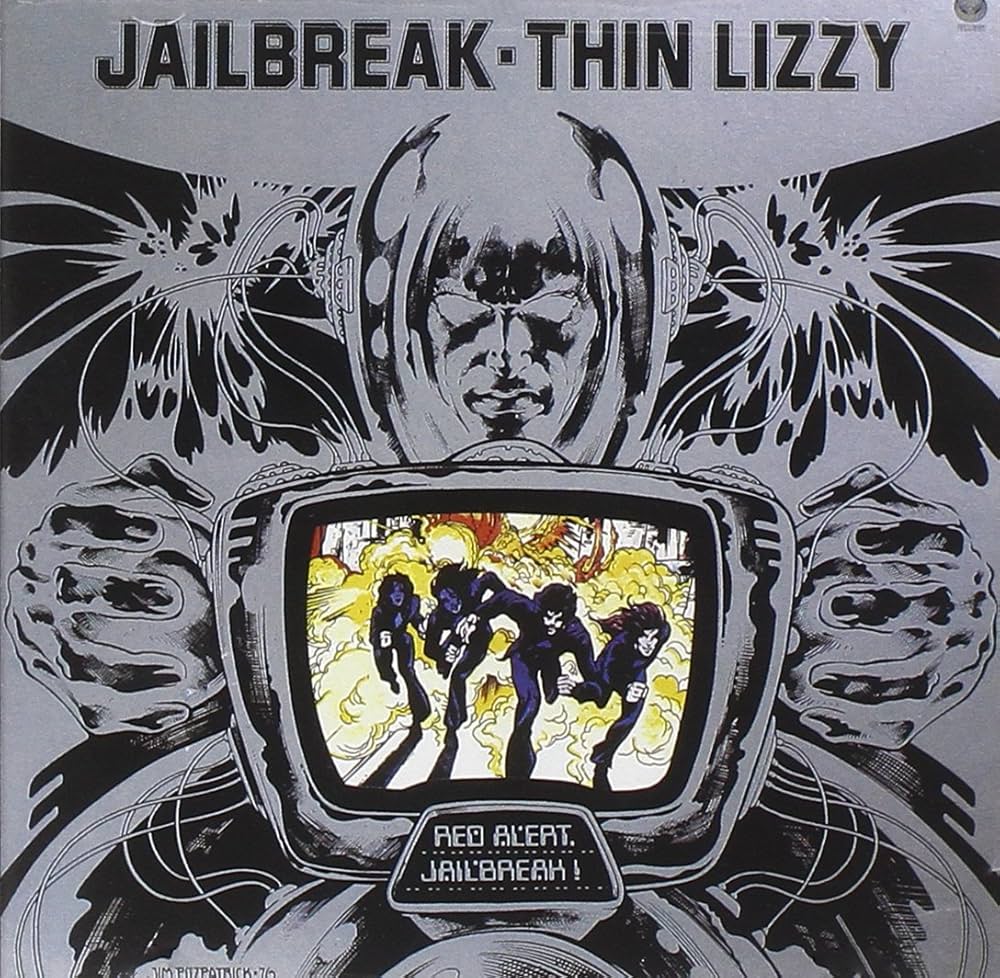
That Irish-American ignorance has cultural consequences, too. I came to Thin Lizzy with a similar sentiment: how the hell was I unaware for so long of such a pioneering figure in Irish music? Certainly he’s remembered fondly in Ireland, where he and his bass guitar are immortalized in sculpture on Harry St. in Dublin, and where Thin Lizzy hits still frequent Irish radio stations. American listeners are most often acquainted with “The Boys are Back in Town,” their most, perhaps only, enduring hit song in the U.S. But Thin Lizzy are woefully underdiscussed even among the loudest and proudest Irish Americans.
Lynott’s legacy gets a little more complicated with the story of his death. Regrettably, he’s one of those artists whose life, legacy, and body of work have become a footnote to the circumstance of their death. You know the story – it’s the official narrative of Jim, Jimi, Janis, and Amy: the preternatural talent who is overwhelmed by fame, fortune, and the burden of proof begotten by those things. They turn to hard drugs, make a few public scenes, and die by overdose, ideally in a hotel room. They are first a tragedy, then a cautionary tale. Lynott is an easy fit for this template: he lived past twenty-seven but not quite to thirty-seven, dying after a heroin overdose in his home on Christmas Day. In a sense, you couldn’t write a more ironic death for an Irish Catholic who struggled so openly with the whole God thing. But what Lynott achieved in his thirty-six years of life is far more remarkable than any death I’ve ever heard of, no matter how Swiftian.
I want to talk about the capacity of music to unite – but in order to do that, I need both of us to abandon our twenty-first century cynicisms. Banish any image you have of Gal Gadot and Natalie Portman singing “Imagine” to an iPhone camera and stay with me. What Thin Lizzy did should have been impossible – at least, to the naked observer. The original lineup of Thin Lizzy were Phil Lynott and Brian Downey – two Dublin Catholics who attended the same nationalist boys’ school – alongside two Belfast natives, Eric Wrixon and Eric Bell. For these four men to come together despite the very contentious border that divided them was nothing short of a miracle. As Thin Lizzy mutated over the years, its lineup remained diverse: Gary Moore was from Belfast, Scott Gorham was American, Snowy White was English, and Brian Robertson was Scottish.
It seems contradictory that Thin Lizzy could, in their particular time and place, transcend so many borders – racial, religious, geopolitical – and still remain purely and thoroughly Irish. Luckily, their frontman was used to being seen as a contradiction. Instead of running from his own shock factor, he embraced it: “To be [B]lack and Irish like Guinness is normal”, he once told the Daily Express, “… everyone else is a bit weird.”
When I say that Thin Lizzy were purely and thoroughly Irish, I don’t mean that they wrote anything like U2’s “Sunday Bloody Sunday” or Sinéad O’Connor’s “Famine” – as the band’s primary songwriter, Lynott’s unique flavor of tírghrá was less politically overt than some of his peers in Irish music history. In one interview with the Irish publication Hot Press, he expresses his wish for a united Ireland in one breath, then squirms out of political sentiment in another: “What do you think of Gerry Adams?” “I haven’t heard too much of him”.
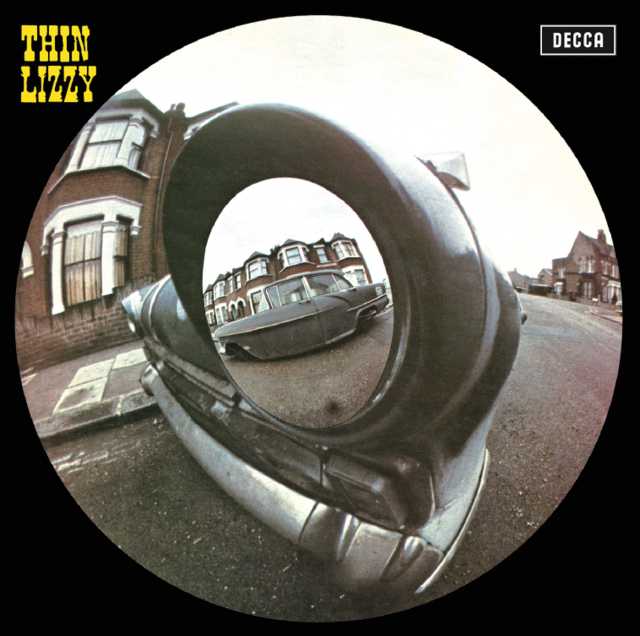
Rather, Thin Lizzy’s Irish roots were finely woven into their sound. The song “Róisín Dubh” is an obvious and oft-cited example: it features an arrangement of four traditional Irish songs, references Irish mythological hero Cú Chulainn, and pays tribute to a slew of Irish literary legends (“Brendan, where have you Behan?”). But take a fine-toothed comb through the Thin Lizzy discography and you’ll find there’s a lot more where that came from. Across a twelve-album run, Thin Lizzy forged a distinct path for Irish rock as a genre, fusing traditional Celtic cadences and ornamentations with the sounds of hard rock. It’s most plainly evident in their self-titled debut album, released in 1970: “Eire” is a proto-“Róisín Dubh” in its references to Irish mythology; “Dublin” is a plaintive ode to “the town that brings me down / that has no jobs / is blessed by God”; and in “Return of the Farmer’s Son,” Eric Bell’s guitar remarkably mimics the cadence of a fiddle. Later, their breakout single was a version of the traditional tune “Whiskey in the Jar” – a decision by their label, Decca, that the band would come to resent, finding it poorly representative of their sound.
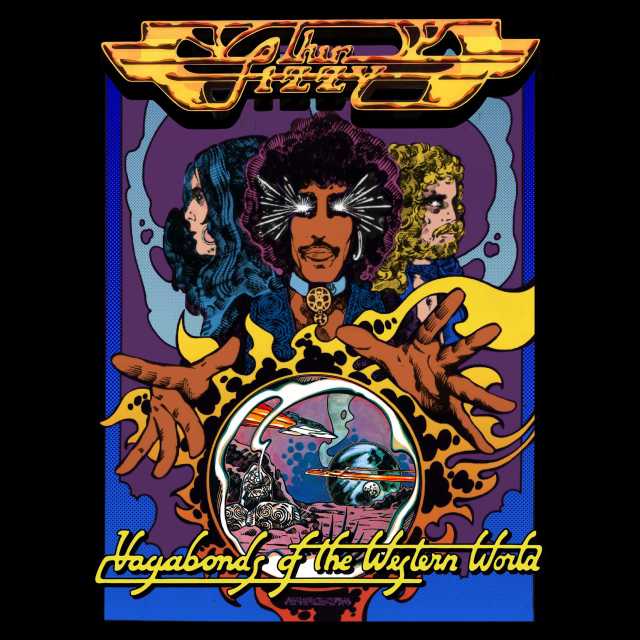
It makes sense: why release a single written by anyone other than Phil Lynott when you had, well, Phil Lynott? By their third album, Vagabonds of the Western World (1973), Thin Lizzy was enacting entire self-contained epics. Lynott penned fables that rival the very mythological tales he cited: “Showdown” (Nightlife, 1973), “King’s Vengeance” (Fighting, 1974), “Emerald” (Jailbreak, 1975), and “Genocide (The Killing of the Buffalo)” (Chinatown, 1980) are prime examples of Lynott’s lyrical storytelling chops. Lynott was never one to limit himself as a songwriter: in one breath, he plays the role of an ardent lover, as in “Rosalie” (Fighting) and “Still In Love with You” (Nightlife); in another, he plays the irreverent heartbreaker, as in “Don’t Believe a Word” (Johnny the Fox, 1976). He could play a devoted family man too, as in “Philomena” (Fighting) and “Sarah” (Black Rose: A Rock Legend, 1979).
Everything that Phil Lynott did to pioneer Thin Lizzy’s sound – and everything that distinguishes Thin Lizzy from their peers in the genre – was a result of his refusal to accept the limits imposed on him. Yes, rock music could sound like a traditional jig translated into electric guitar, just as Lynott could be Black and Irish, and just as Thin Lizzy didn’t have to confine their lineup to the borders of the Republic. Lynott did more than just prove Irish folk was compatible with classic rock – he proved that there was ample room for a misfit like him in rock music.