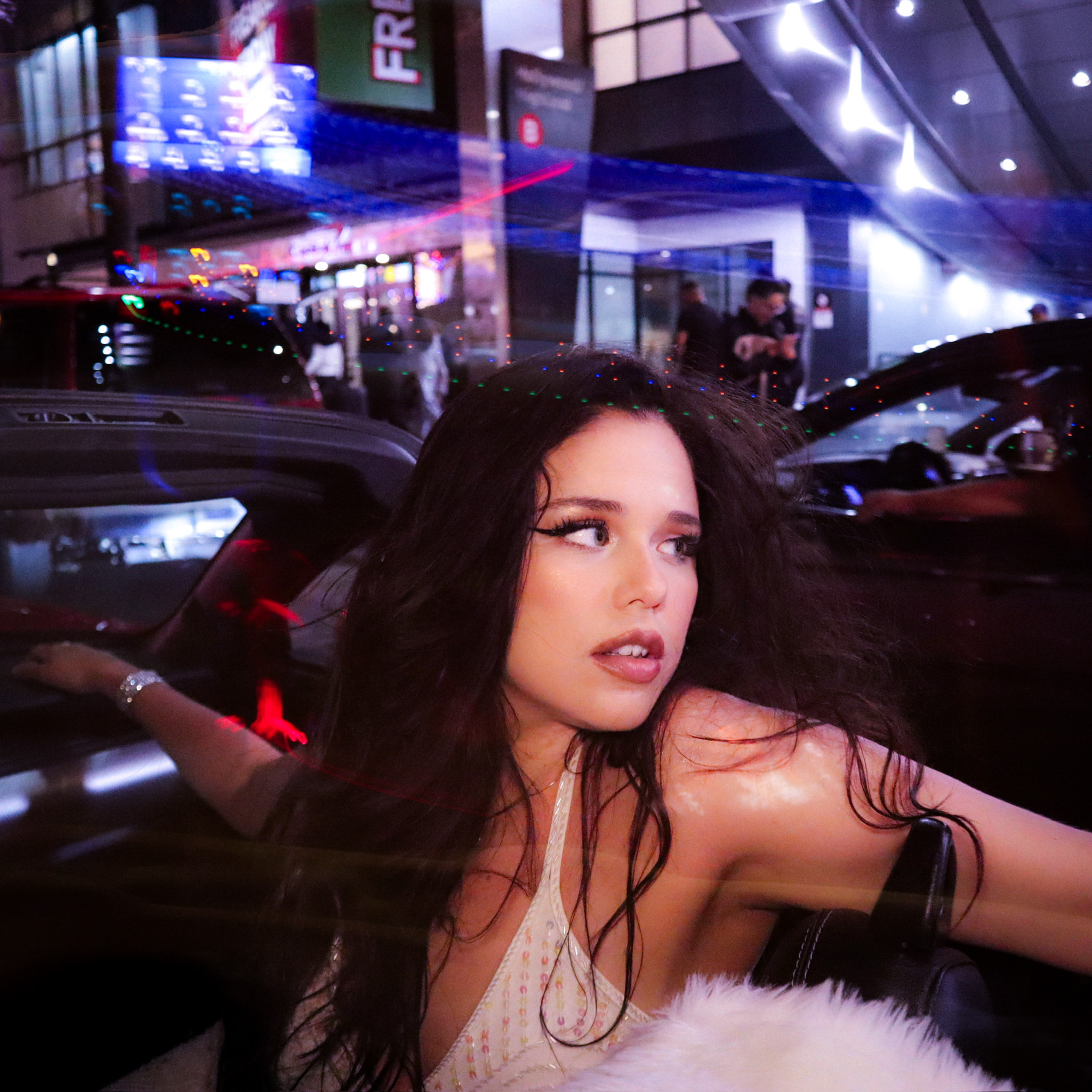
Rora Wilde feels like the lead character in a Netflix series. A “singer/songwriter/princess” according to her Instagram profile, Wilde was born and raised in a small town in Texas, a self-proclaimed “country bumpkin” who moved to L.A. to become a fierce, completely lovable and ferociously talented R&B singer. Hell, even the title writes itself – “From Country Bumpkin to Vixen.” I’d watch the hell out of that. Maybe Wilde, who released her empowering debut album, Vixen, late last year, feels like she is starring in the movie of her life because she has been preparing for this her whole life.
“I felt very much like somebody who always wanted to be on stage. I grew up acting, writing little skits, writing songs, making music videos that were not even being filmed, just pretending we were making a music video,” she says. “I was always in la-la land creating a world where I’m on the TV that I that throw on every morning at six a.m. and VH1 and MTV is showing all these music videos. In my mind I always was in those worlds and I just so badly wanted to be somebody who did that.”
When you are lucky enough to sit down with Wilde, as I did, you find that idealistic, adorable dreamer is still very much in there, even though as one would imagine, the transformation from awkward country bumpkin to gorgeous aspiring R&B diva has many bumps and bruises along the way.
“Maybe parts of myself I over sexualized. I started writing with people and producers that pushed me in a more sexual way and I was like, ‘Oh, okay, let me just play that part.’ I have a background in acting, I can do that, but it wasn’t authentic to me. I didn’t know what it meant. I didn’t know how to hold my own in that world because it’s something I never associated myself with. I associated myself with cello practice, rehearsal, playing the coffee shop and playing scales and singing,” she says. “And that’s what I knew. I didn’t know anything about dressing up, I didn’t put on makeup till I was like 24 years old.”
What type of series would Wilde’s story be, though if there wasn’t a triumphant comeback for our heroine? Of course there is the hero moment. That moment is Vixen.
“Vixen is my very pop R&B forward therapy session,” she says.
More importantly though, it’s where our fearless protagonist learns how to turn those youthful lessons into wisdom and experience.
“After crashing and facing a lot of consequences honestly from over sexualizing myself and letting certain collaborators do so I found my way from innocent baby to my own world and my own confidence and femininity, very much She-Wolf energy vibes,” she says. “I think every woman has a vixen inside of her and I wanted the album to be a playlist for confidence, accountability, sexy fun, girly pop and all that stuff. So, it was just really about finding my own confidence.”
Like any elite protagonist, Wilde is a richly drawn lead with complex and unexpected little eccentricities. My favorite of those is that mixed in with her deep admiration for acts like Erykah Badu, Kehlani and Lady Gaga is a mild obsession with the songs of Bob Dylan, who she even does a so-so but charming impression of.
“He is the storyteller of all storytellers. I’m obsessed, I just want to freak out and watch ‘Desolation Row and I even want to hear the JFK song [‘Murder Most Foul’], all of it, do it. He probably doesn’t even remember the whole thing. So, I’m going to give him a music stand with the lyrics. I love it. And whatever he’s going to do that night, the hit or the miss, I want to be front row. I will just be bawling,” she says excitedly at the prospect of seeing the Bard live this summer for the first time.
For Wilde, the idea of spinning a yarn, bringing people into the world she is crafting, is what unites the likes of Dylan and Badu, her dream artist to open for.
“I want to learn from her storytelling and her power on stage,” she says of Badu. “I don’t
know how many times I watched or will continue to watch her live performance of ‘Tyrone.’ She was not only singing beautifully, it was stand-up comedy at the same time. She had everybody laughing and cheering, she had everybody right fucking there. I’d want to experience that live and just learn from it too.”
Because for Wilde, while she has that stunning and forceful R&B-tinged voice and her songs would feel right at home late at night in a dimly lit lounge or next to Sade, Barry White and Olivia Dean on your playlist, she is still, at heart, a storyteller herself.
“I think a lot of what I do live is storytelling. I want everybody to understand the songs that I’ve written in a way that they come to life in front of them and make them feel like I’m telling them the story in line for the bathroom. I want it to feel that way rather than it be this performance like a recital. I want it to feel like a story.”
Vixen is very much telling a story. Though not a traditional concept album like say The Who’s Tommy or Pink Floyd The Wall, Wilde programmed it to be an auto-biographical work, like a novel, or, well, movie/series.
“It’s very much chronological too, from beginning to end. So much of my confidence goes in a very specific direction. At the beginning I’m the very innocent baby girl who is over sexualized in ‘KISS,’ ‘After Party’ and all those very poppy records, ‘Girls Love the Beach.’ Then after ‘CTRL’ I get into this accountability and find my self-respect moment in ‘sober dead drunk or alive,’ ‘Say It’ and ‘Driveway.’ Then I end with ‘Sex, Drugs & Rock n Roll’ because that’s me owning all the parts of myself.”
Like any great movie or series there is that epiphany moment when the John Williams or Ennio Morricone score rises triumphantly and the audience, totally invested in the hero’s journey, shares that realization with them. For Wilde that epiphany is both a profound and moving one.
“I am still that awkward girl. I am still that nerdy kid, still first chair in cello, in orchestra and symphony,” she says. “I’m still there, but I’m also tapping into these new parts of myself. That’s why I feel like I’m not really changing. I’m just expanding my color palette because I feel like so often, we limit ourselves in our identities. That’s really another aspect of what Vixen is about, you don’t have to be one thing.”