

If you were to stumble upon a rare copy of the Even Dozen Jug Band’s sole and self-titled album on CD, you’d find within the liner notes a revelation offensive to anyone familiar with Maria Muldaur’s work: that producer Paul Rothchild (The Doors, Janis Joplin) insisted she remain a backing vocalist, believing her voice “didn’t record well.”
I wonder now if Rothchild has eaten his helping of crow – because if Maria Muldaur’s voice doesn’t record well, whose would? Like many, I first heard Maria’s voice by way of her 1974 superhit, “Midnight at the Oasis”, and my first reaction was one of great envy. I trained as a singer myself, and I know that what Maria Muldaur brings to the table can’t be taught. I don’t mean to suggest that her talent was uncultivated, quite the opposite – listening to a Maria Muldaur record is a bit like watching an Olympic gymnastics performance: so many magnificent flips, glides, and twirls it could make you sick just witnessing it. But what her voice is, what lies beneath those years of practice and performance, is something superhuman entirely – that twangy, full-bodied tone is something you simply can’t learn, it’s something you’re born with. Maria was born with it.
In the sixty-odd years since the making of that record, her backing credits alone are noteworthy: you can find her on tracks with the Jerry Garcia Band, the Doobie Brothers, and Linda Ronstadt (she’s that voice which makes the haunting harmony possible on “Heart Like a Wheel”). Bob Dylan and Carly Simon were fans and friends during her ascent; Joe Boyd and Amos Garrett were frequent collaborators of hers. As for her own ventures, she’s released nearly fifty albums since 1969, including a two-album run with her onetime husband Geoff Muldaur.
Reading interviews new and old with Muldaur, I get the sense that she – and her voice – were critically underestimated all too often, usually because whomever was writing was distracted by her face. Find any account of Maria as a young woman, and it’s usually qualified by the phrase “I had a massive crush on her”; read any report of her live shows by a male journalist, and you’ll likely read more about her legs than her pipes. One NME writer dubbed it the “Muldaur effect”: Maria’s music was always second to her sex appeal.
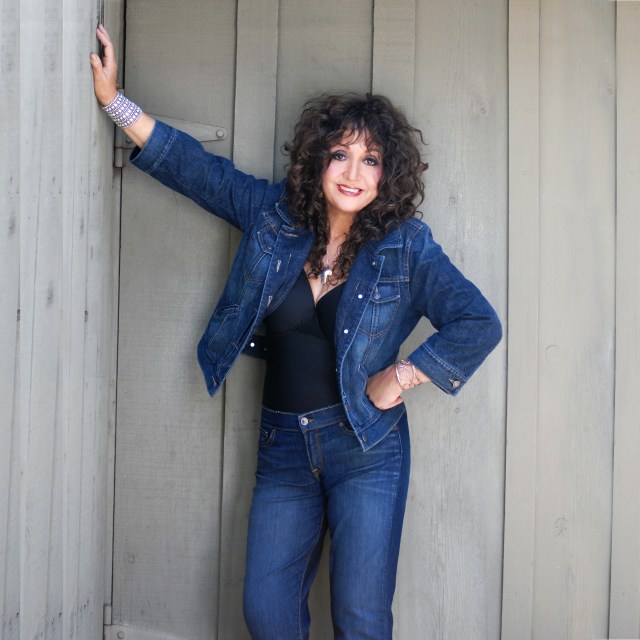
Maria is, indeed, arrestingly beautiful. (If Julia Louis-Dreyfus’ heyday had coincided with today’s biopic craze, she could have easily depicted her.) She stands out in photographs, especially the one blessing the cover of Joe Boyd’s memoir White Bicycles (if you haven’t a copy, look it up – your eye will draw itself to the young girl lost in concentration). Promotional material for her early work has all the marks of a label eager to transform a singer into a sex symbol: one such photo features her full-haired and half-dressed in a field, a dark-haired homegrown beauty with a sultry expression. One gets the sense, looking at her 1974 Rolling Stone cover, that her it factor oozed from her pores, too.

But it’s always a shame when a talented woman is reduced to a pretty face, and doubly so when that woman’s oeuvre holds the key to the genesis of a genre. Maria Muldaur was Americana before Americana had a name; she combined the blossoming traditions of early R&B and blues music with a roaring country-queen sensibility. Her early track lists prove a dexterity across the then-stiffer dividing lines of genre – particularly her first record, which reels you in with a rollicking version of “Any Old Time” and sends you home with “Mad Mad Me”, a gentle, dark ballad fit with a string arrangement. Her second record, Waitress in a Donut Shop, achieves a similar effect as it attempts to balance its even-tempered, hymnal tunes among the funky and full-throated ones. Experimentation became a trademark of her style – later, her 1979 record Open Your Eyes featured a few bona-fide rock’n’roll tracks, which she performs as masterfully as she does any bluegrass tune. Jazz and gospel were no strangers to her, either, particularly after the turn of the century.
By her own account, Muldaur’s mélange of music styles is the natural product of her environment. She grew up in Greenwich Village in the fifties, where she was fed a steady diet of country and bluegrass music; she supplemented her musical knowledge by tuning into R&B stations, where she came to revere pioneers of popular music like Muddy Waters and Ruth Brown. Her jug band tenure – first with the Even Dozen, later with Jim Kweskin’s band – came by accident: she was plucked from a crowd of wannabe chanteurs in Washington Square Park by blues legend Victoria Spivey, who happened to be advising a group of young male musicians across the park – Spivey suggested that they needed a woman’s touch and laid her eyes upon Maria. (Last year, Muldaur released an album of Spivey’s songs entitled One Hour Mama.)
In 2021, Muldaur told Jazz Weekly that it was Spivey who first encouraged her to exercise her sex appeal on stage: “‘It ain’t enough to go up there and sound good; you’ve got to look good, too’’’. Those were two things that came naturally to Maria and defined the spirit of her early performances. But as Muldaur grew into her solo career, she eventually took her sex appeal off center stage. In 1978, she told a Rolling Stone reporter asking about her depiction as a sex object that she “didn’t mean for this to happen” – and her track lists throughout the years reflected that sentiment, swapping balmy ballads for theatrical, gospel-inspired tracks.
That was quite a drastic change from Maria’s foundational identity, particularly in a market where mainstream sex appeal can make all the difference for a solo female artist. Perhaps it was really this shift – coupled with a move away from the Hollywood bustle to a secluded life on the shore of the Bay Area, where she raised her daughter, Jenni – which allowed Maria Muldaur to fall out of the limelight. But Maria never lost her magic: as she aged, so too did her voice mature, and later recordings of her evidence years of dedication to her craft.
I’ve been searching for a word to describe that magic since I first heard Maria’s voice, something other than it; it turns out that Linda Ronstadt did the work for me. In the 1974 book Rock’n Roll Woman, she tells Katherine Orloff that Maria Muldaur was her favorite woman in music:
She’s the only girl I can think of, who doesn’t sacrifice an ounce of femininity for what she does…Maria does in fact succeed in a man’s world on a man’s terms without… becoming masculine in any way. She’s always feminine, and it doesn’t mean that she has to be receptive and passive and do what she’s told, and always come on like a sexpot or anything like that…I think that’s the ideal of being an equal in this world.
Ronstadt has it exactly right. Maria’s magic wasn’t in her sex appeal, not quite – it was in her femininity. It was that ultra-feminine quality of hers that had her ushered into the Even Dozen by Victoria Spivey, and it’s carried her to the top of the charts and beyond. A little bit of YouTube digging will turn up performances of Maria’s over the years: her and Dr. John promoting “Three Dollar Bill” on the Midnight Special in 1974 are particularly fun to watch. You can find recent performances, too – she still performs in the Bay Area today. There’s one such video from 2012, where she sings her version of “I’m a Woman”. When you watch her command the stage the same way she did forty years prior, you can still see it. I realize, watching her dance, that Maria Muldaur’s magic really can be that simple: that voice is all woman.