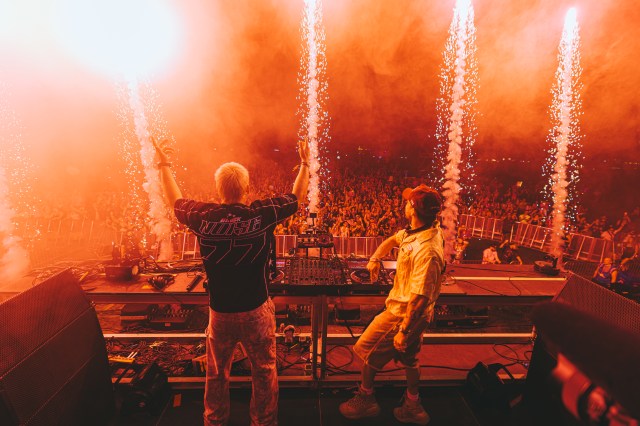
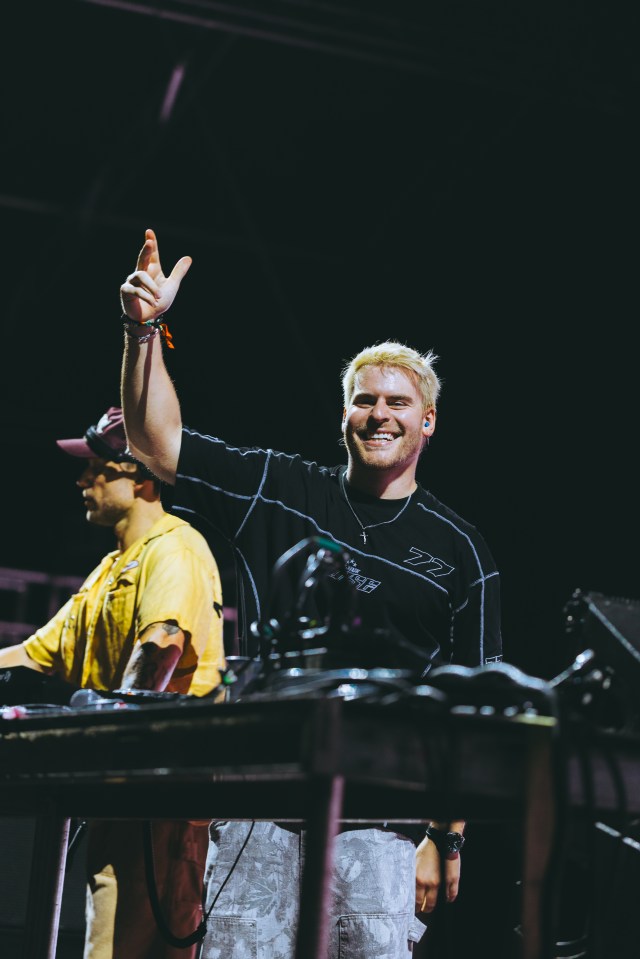
Over the last few years, SIDEPIECE has become impossible to ignore in EDM, leaving a lasting mark on the genre while turning small-club sets into full-production spectacles and becoming a can’t-miss act at some of the world’s biggest festivals. The DJ and production duo of Dylan Ragland and Ricky Mears keep pushing out music they love, always finding new ways to make their world, and the world their music fills, just a bit louder and a bit more fun. If co-productions with Diplo and Disco Lines, along with official house remixes for the likes of Lil Wayne and Bobby Shmurda, do not already make the case, these guys mean business, and they are not slowing down anytime soon. Hit Parader caught up with them to talk about the busy yet exciting year ahead, the moments that keep them grounded, what led to their new single “Can I Ride,” out today, and what their Lip Service Compilation album, released on their own label, means to them. Their love for the craft is infectious, and this interview makes it clear: SIDEPIECE is here to stay, grateful to be here, and ready to have a good time.
Hit Parader: Just to start off, tell me about your favorite moment from live shows, track releases, or anything else this year!
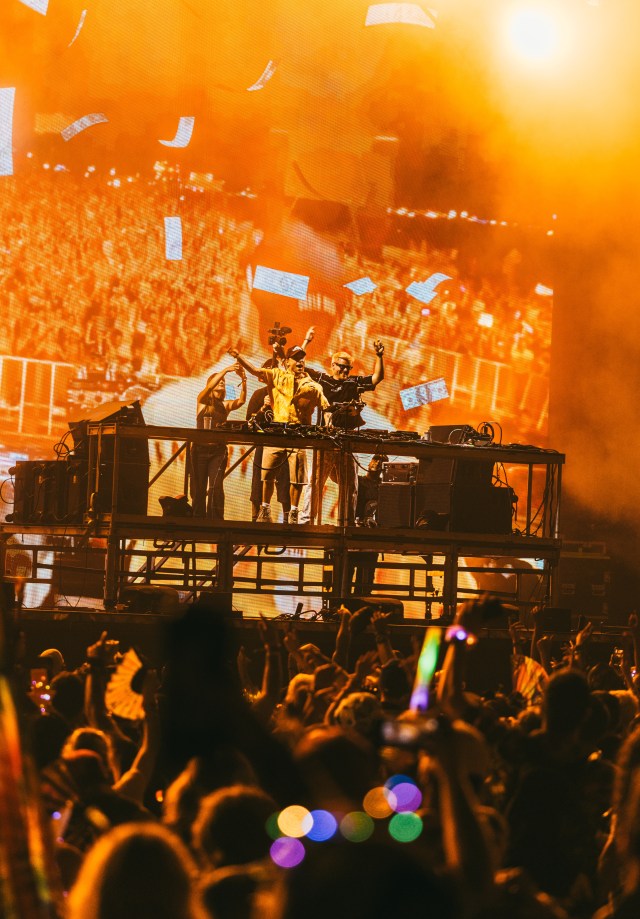
Dylan Ragland: We created something called the Disco Lips. For anyone who doesn’t know, our logo has always been lips; that’s kind of our theme, so we built these 10-foot-wide, giant lips. It was a whole process. They were super expensive, super detailed, and completely worth it. When we finally saw them finished, they were amazing, hand-pieced mirrors and everything. The first show we used them, seeing the crowd’s reaction when we lit them up for the first time was pretty epic. We always have big shows, but for me, that felt like our whole team coming together to create something special, and now it’s something people talk about.
Ricky Mears: Yeah, one that stands out, we played Brooklyn Storehouse, and it felt like the perfect venue for the lips.
DR: Yeah.
RM: But Orlando and a few other places looked incredible too.
HP: And that was your biggest show to date, right? Or the biggest headline?
RM: The biggest headline we’ve ever done as SIDEPIECE, yeah.
HP: That’s insane. And you brought out Bobby Shmurda?
DR: Yeah, perfect timing, his hometown.
HP: That’s awesome. We’ve been asking every artist we’ve interviewed today the same question: what’s one song or album that has changed your life, for better or worse?
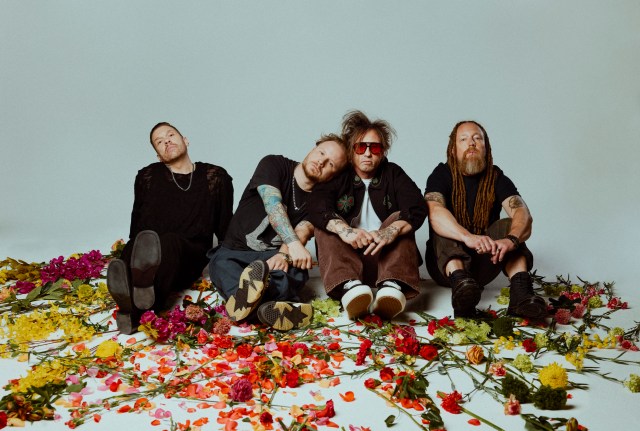
RM: Mine’s probably not dance music. It’s hard because they’re so different, but I’ll give two. Deja Entendu by Brand New, kind of post-hardcore rock. That record is just ingrained in my head; I love it. And honestly, I love Slipknot. Vol. 3 (The Subliminal Verses) is another one, I can basically recite both of those albums front to back. I just get obsessed with them.
DR: This is tough for me. I’d say The Battle of Los Angeles by Rage Against the Machine, mostly because of the time in my life when it came out. You form a lot of core music memories when you’re young, and I was already a big Rage fan. I’d also say Untouchables by Korn. That one stands out because I had to sneak into a record store to get it, I was underage, and the parental advisory sticker actually mattered then. So it’s not just the album, but the memory around it.
HP: Out of curiosity, what’s a recent moment, within the past year or so, that reminded you why you do this?
RM: We were just talking about this. We played a show in South Korea, a small, sweaty club with maybe 500 or 600 people, and they were going crazy the whole time. Singing along, fully engaged, not a bunch of phones out. When we walked offstage, we were like, “That’s what house music is about.” It wasn’t a huge festival, it was just a packed club in a place where we don’t even speak the language, and they were completely with us.
DR: Yeah, music is a universal language, especially dance music. For me, it’s when people come up and say things like, “This song changed my life,” or “I met my wife at your show,” or “Your music helped me through something.” That’s always wild, because we all have those experiences with music, but to realize you’re part of someone else’s story in a positive way is powerful. Even when we think of our music as just fun, simple dance tracks, you never know how it’s connecting with someone.
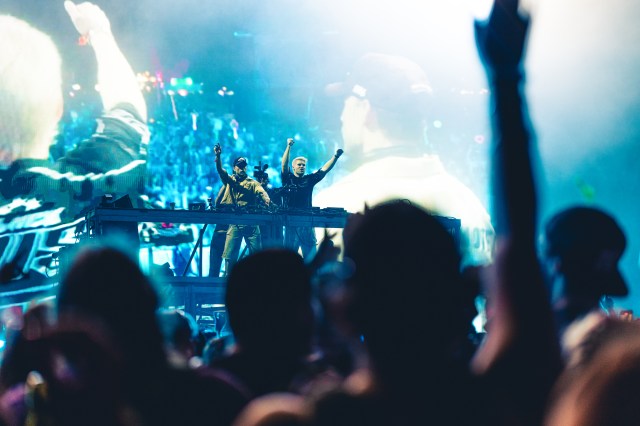
HP: That’s fair. You’ve got a huge summer coming up, Europe, festivals, all over. Best market you’ve played, most surprising market, and where you’re most excited to go this summer?
DR: Aside from Bonnaroo? [laughs]
RM: Bonnaroos sick! A surprising one, we played Pensacola, Florida, near Panama City. You wouldn’t expect it, but it was one of the rowdiest crowds we’ve ever had. For two hours, people were going absolutely crazy.
DR: Yeah, consistently we’ve had some of our biggest crowds in LA, Denver, and the Pacific Northwest. This year we had one of our biggest shows in Chicago, and obviously Brooklyn. It’s hard to pick just one place.
HP: I caught a moment in the Brooklyn set where you sampled a 95 South track, that was really cool.
RM: Good catch!
HP: I’d love for you to tell me about that track, and your process for finding unique or niche samples.
DR: You’re the king of segues; that’s actually our next release, and we’ve been opening our set with it. I was digging through 95 South’s catalog on YouTube. Some of their bigger tracks have been over-sampled, so I went deep, listening to every album, every song, just looking for a line. I was on a plane when I heard the one we used and thought, “That’s it.” It had this female vocal hook, which actually isn’t even the main group, it’s a feature.
RM: Yeah, when we reached out, they didn’t even fully remember it. They were like, “We’ve got the contracts, you’re good.” When Dylan made the first version, we all immediately felt like, “This is SIDEPIECE.” It didn’t feel like a remix; it felt like something we had to properly sample and release.
DR: A cool full-circle moment is that we got members of 95 South to record lines for the intro, so they’re actually featured on the track.
HP: So it’s not just a sample, it’s a collaboration.
DR: Exactly.
HP: That is so cool. And I heard that the Lip Service compilation album is dropping this summer, congrats! How do you choose artists for that, and what’s it like being on the other side of the industry supporting new talent?
RM: Lip Service came from the same mindset as digging for samples. Even before we had a label, we were finding tracks on SoundCloud and playing them in our sets. As SIDEPIECE grew, we realized we could build something around that, finding artists who are excited to send us music and get it out there. We’ve discovered a lot of talented people who genuinely care about what they’re making.
DR: For us, it’s two things: we have to love the song and want to play it, but the artist also has to believe in it and push it. It’s not just about social media; it’s about caring enough to want people to hear your music. If you love your track, you’ll naturally want to share it.
RM: We’re going to post your song because we believe in it; we want you to do the same.
DR: It’s also meaningful for us because we benefited from people taking a chance on us early on. We wouldn’t be here without that, so it feels good to be able to do the same for others.
RM: And the compilation is going to be great.
DR: Yeah, the music is awesome. First of many.
HP: That’s amazing. I’m stoked for you all.
DR: Appreciate you having us.
RM: Thanks, man, it means a lot.