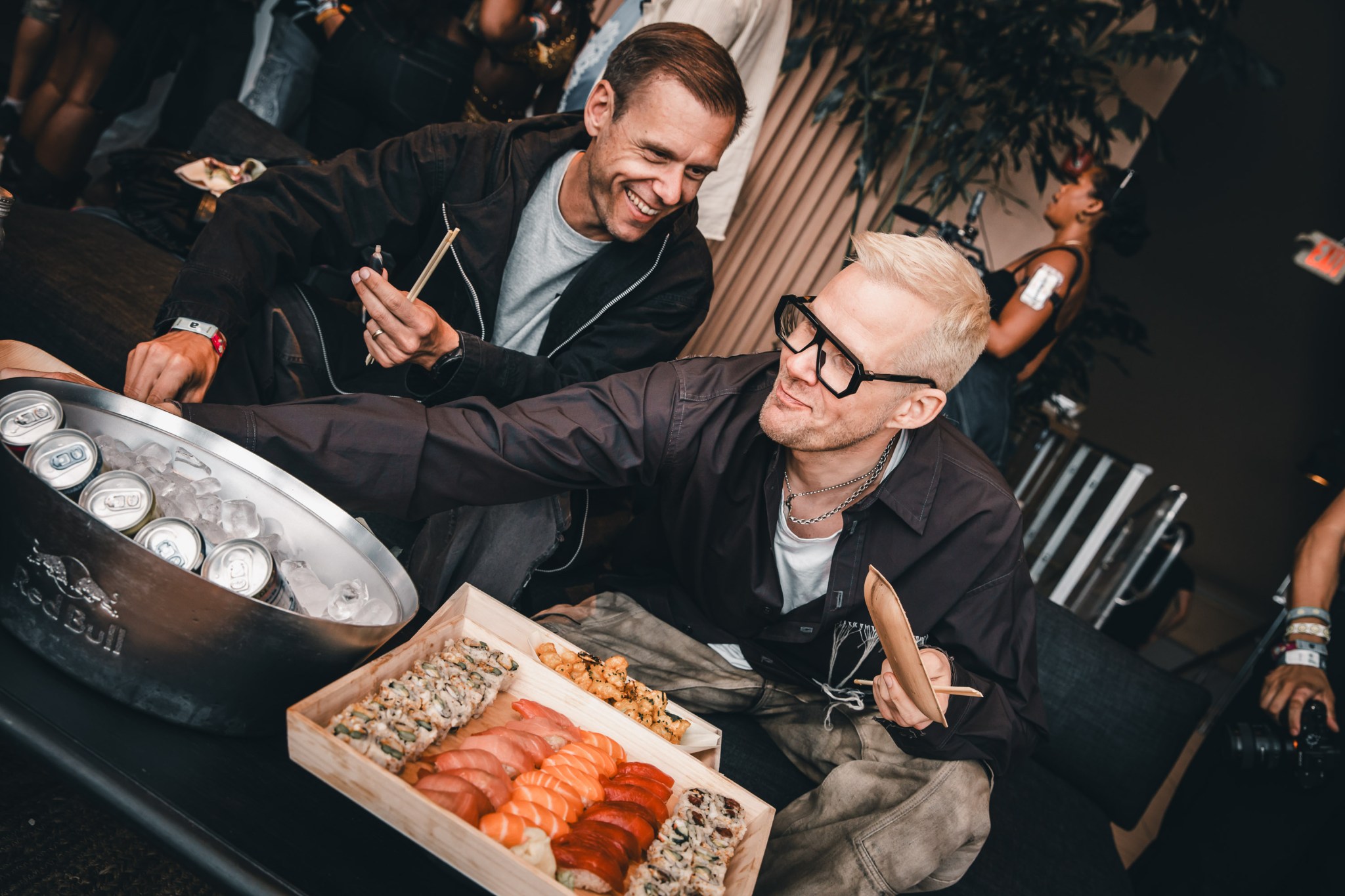
As always, there were multiple Coachella’s happening this year. There was the mainstream pop one frequented by influencers and brands. But for those who wanted to avoid the crowds for Bieber, Sabrina and more, there was a vintage Coachella featuring some of the most elite old-school DJs, guys like Moby and Kaskade, who are a huge part of the legacy of Coachella.
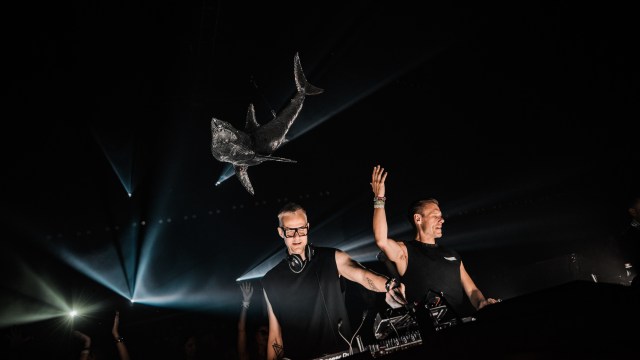
One of the most anticipated and exciting sets of the second Coachella was the b2b (back to back) teaming of trance and techno, Armin Van Buuren and Adam Beyer. With a combined more than half a century atop their respective subgenres and championing the music they love via acclaimed radio shows, they are two of the true leaders of today’s dance music scene.
Before weekend two of Coachella, they sat down together with Hit Parader for an in-depth state of the scene conversation.
Hit Parader: Before we come on to Coachella, very important question. Adam, what’s your dog’s name?
Adam Beyer: My dog’s name is Kate. Quite unusual for a dog, for Rottweiler.
HP: I don’t know if you guys got to see, or at least you saw the highlight of David Guetta’s set this weekend when he saw his daughter in the crowd, which was a viral moment. The reason I bring that up is because I spoke to him during COVID, and he spoke about the fact that for him, he liked being home because it was the first time he had a summer vacation with his kids in 10 years. So, for you guys, both of you, I’m sure you love the thrill of playing live, but is there also that desire to be home more?
Armin Van Buuren: I’ve made a radical change in my life since six years ago. I really had, as they call a spiritual awakening, if you will, that I wasn’t happy doing like 130 shows a year. Being away from home for me, sometimes it’s not good. And I guess I started to believe in the fairy tale of DJing a little bit too much because it’s a surreal world that we create. And I decided to only do 70 shows a year. So, this August, you won’t find me doing any shows. I even said no to the Ibiza residency 14 weeks. I’m still playing Ibiza. I’m doing six shows, five in September, one in June, and I really enjoy it.
But it’s a conscious decision not to play every week anymore because, a, I don’t enjoy it, I feel I’m too much of a robot, and, b, I get to be with my family for at least a month just celebrating holiday season. I said yes to kids, but I have to admit on the other side that it’s very hard because I’m FOMOing a lot seeing him shine on all the big festivals and I’m not there. I really enjoy playing, I’m a DJ at heart but I found that I need to do 70 shows a year. That’s, for me, where the balance is so that means two weekends a month off and also just to give me more creative freedom. And I do normal people’s stuff — reading books, playing the piano, listening to jazz music, barbecuing, spending time with family. And I think for me, this is essential for still doing the DJ thing. As much as I love it, I can’t do 130 shows a year anymore.
HP: The reason I mentioned it is because I had a conversation with Guetta. But doing interviews during COVID was such a Rorschach test because I interviewed everyone from Stevie Nicks and Lenny Kravitz to Guetta and Willie Nelson. You had musicians, half of whom loved being at home because they’ve never had a break. And half were like, “I’m losing my fucking mind. Get me back on the road.” So which side were you?
Beyer: A bit of both. I can recognize myself in both sides. Like, when I’m full steam and in the mix of it all and I’m on the road, I love it. But then I do have moments where I’m like, cracking because I’ve been touring for 30 years professionally. I’ve gone full steam for 30 years pretty much without any longer break apart from COVID and obviously I have three kids at home and although divorced now after COVID and everything, I’m getting closer with my kids, and I want to stay with them but then I have to go again so it can be tough to make those decisions.
But at the end of the day, it’s a job and now at least they’re big enough to sometimes bring them. I brought them to Coachella last time I was here and they loved it. It’s all about balance and just like Armin I certainly cut down on the partying and the rock and roll style over the last few years and taking a lot more responsibility, not putting myself first all the time.
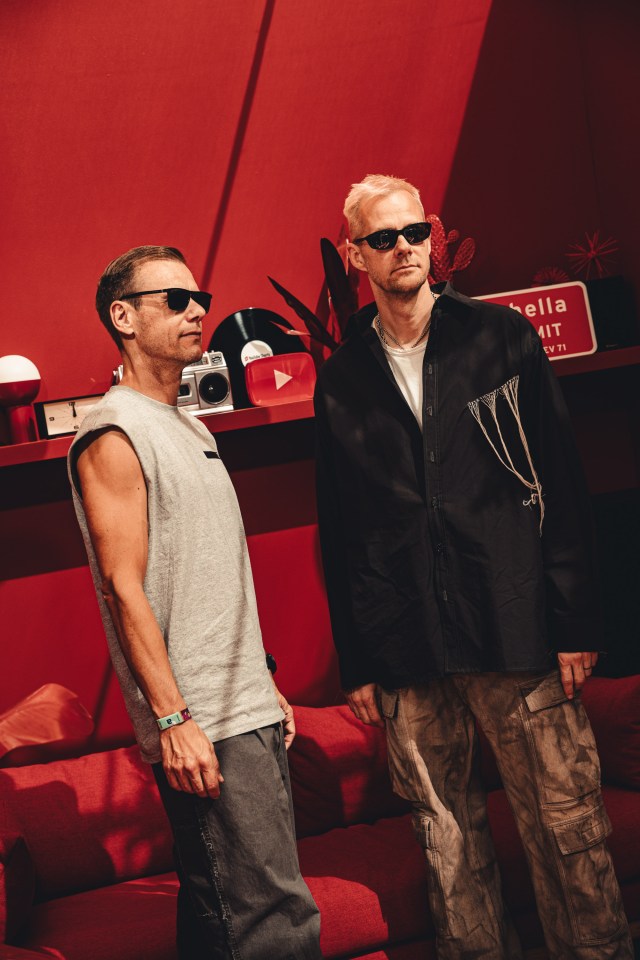
HP: When you do less shows, I imagine when you do something as massive as Coachella, do you appreciate it more?
Van Buuren: Well, it’s a big honor. I have a lot of gratitude for being here and playing back to back with one of my heroes, Adam Beyer. And the fact that I still get to do this after so many years is something to be … the only word that springs to mind is gratitude. I’m very grateful to be here and I realize it’s very special. I’m really trying to enjoy every moment, trying to be here, not only physically, but also mentally.
I don’t know if I’ll ever play Coachella again. This might be my last time. That’s what I tell myself. I don’t know if there’s going to be a next year, but we’ll see. I’m really having an amazing time also meeting all the people, feeling the vibe. And I guess when you’re an up-and-coming DJ, you don’t realize so much that what’s happening is actually something really unique. I had the pleasure of performing and DJing for 25 years and playing some of the world’s biggest stages. But you’re right, the older you get, the more appreciative you become. And I actually like being a little older now. I have less anxiety. I have more confidence walking on stage.
Another thing that I really like about this era is that I felt the first time I came to the US, I sometimes had nights where the crowd was really flat. I feel that that doesn’t happen anymore. I think the crowd is so much more educated, not only at Coachella, but festivals in general. People seem to have incorporated electronic music in their lives. When I first came to the US, the questions that they asked every interview was, “How long do you think this house music will be around?” Everybody thought it was going to be a temporary thing. And now we can acknowledge that it’s going to be around for probably forever. I don’t know what the future will bring, of course, but electronic music has fared out through all styles of music. Any type of music you listen to nowadays is made in an electronic way. Electronic music is now influencing all kinds of music. And I think it’s fantastic to be a small part of that.
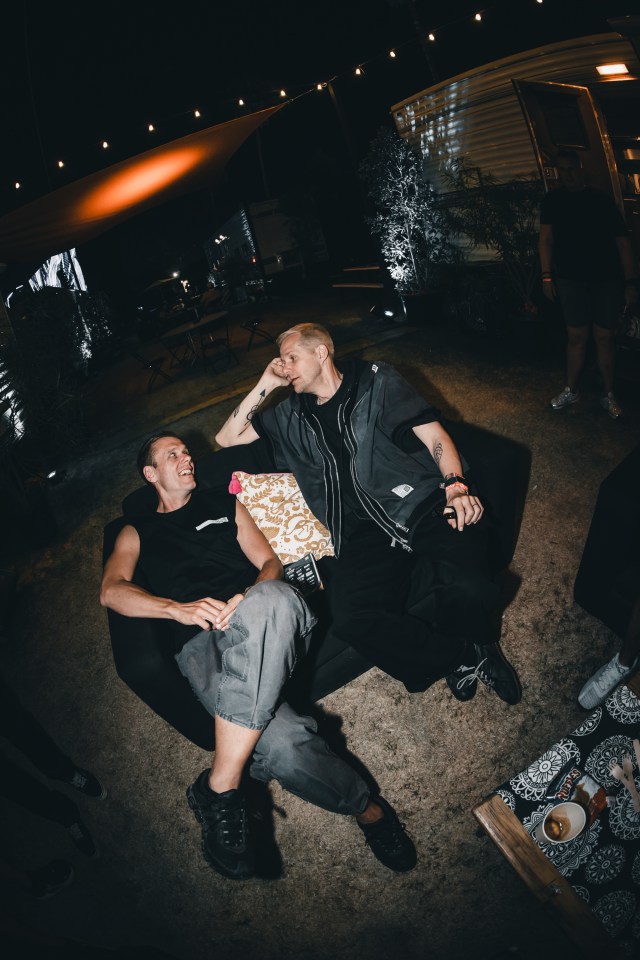
HP: For you guys, did you get to enjoy it and see your peers like Moby and Kaskade?
Beyer: I walked around a little bit, but it’s so crowded this year. It’s almost a little bit intimidating to walk around too much. And the most popular shows are insanely busy. I went to see a little bit of Duke Dumont. And last time I was here, when I was here with my daughter, I went into the crowd and I watched. I really wanted to see Labrinth for example, a big hero of mine. It’s always those cool names that you’re never going to get to see anywhere else.
HP: For you guys how much fun is it just to have that camaraderie on stage and be able to interact and not just isolated as you so often are?
Beyer: For me it’s been something super great. Me and Armin haven’t actually known each other that long personally. I just always had huge respect for him, obviously with everything he’s accomplished. We come from different scenes; he’s doing a lot bigger things than myself in terms of scale and stages. So, for me to work with him and see how he works, it’s a huge learning curve. After 30 years in the industry, it’s something I treasure because I thirst for more knowledge and to meet people who are doing something that I’m not that I can so be inspired by.
Also, I think it gives me a lot of energy to go into this year now as a solo artist to have worked with him because when two minds meet like that and something new happens, it gives you inspiration and energy. Then we turn out to be really similar in the way we prepare, and we are the exact same age. There are a lot of similarities. So, there’s also some nice talks between the work stuff. That makes me realize how important it is to connect with other artists more and share.
Van Buuren: I think also with the situation in the world right now, you have to understand it’s almost like black and white, the worlds that we come from, trance and techno. Some techno fans hate trance; some trance fans hate techno. But the fact that we are coming together is also a statement. I’m still trance he’s still techno, that’s not changing. But to find common ground is a statement to the world, we need to embrace our differences and try to have an open mind. We don’t have to agree on everything; there are tracks of mine that he doesn’t like and it’s fine and vice versa. But it’s not about that, it’s about where we can find common ground and we found that common ground in “Techno Trance” and that’s super exciting.
It’s a new thing for him; it’s a new thing for me. And there’s more of a hostile atmosphere in the world right now and I think the music industry gives an answer to that by not staying in our own halls but trying to find where we can meet and where it is possible to have a sound. And I think it’s exciting for fans because we’re not walking the easy route. It would be so easy to walk in here and play a normal set solo. I would enjoy that for sure. But Coachella is also in a way challenging us to step a little bit outside our safe zone, which I think is super interesting.