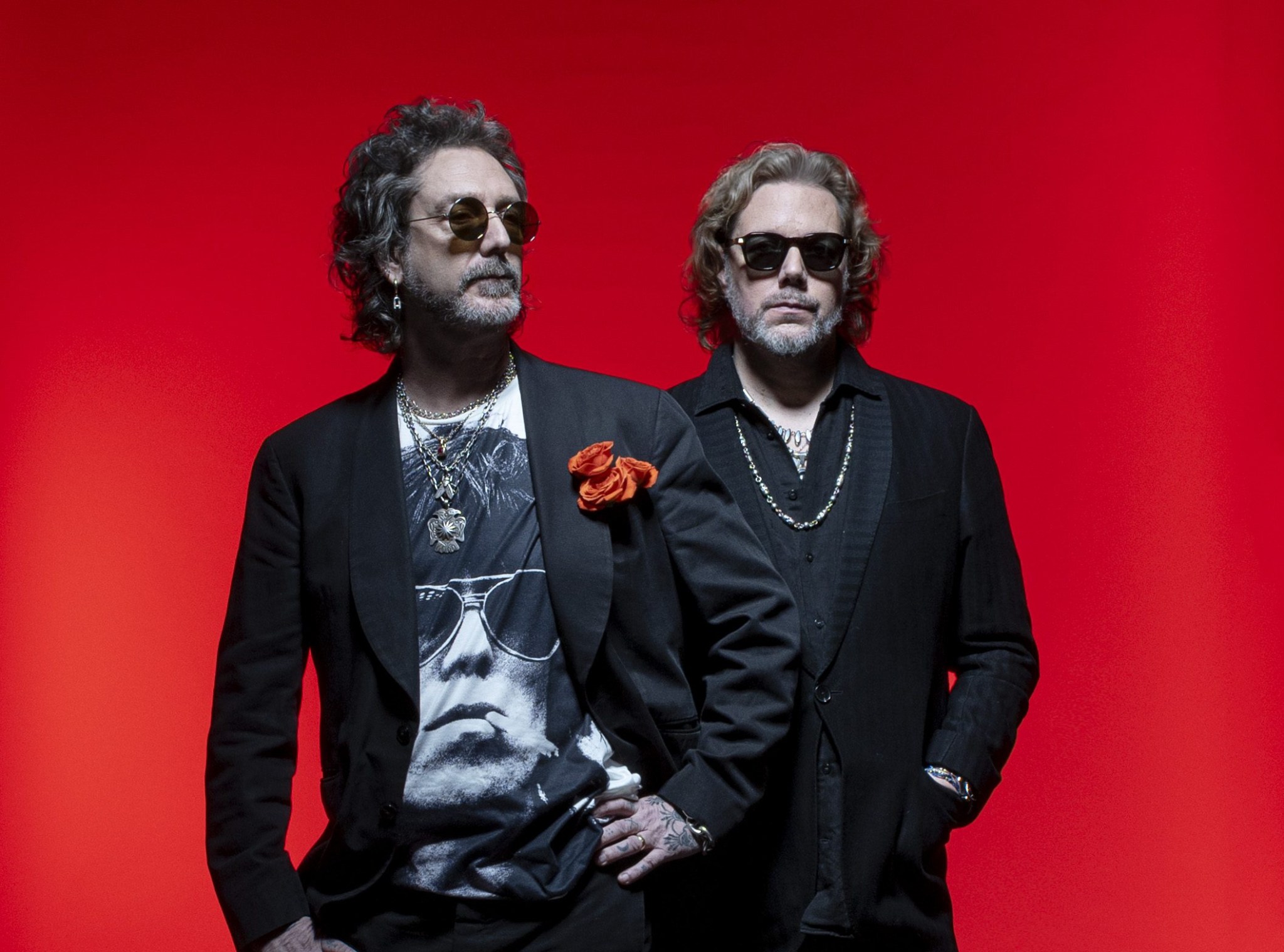
More than 30 years into an iconic career that sees them nominated for the Rock and Roll Hall of Fame again this year, the Black Crowes have delivered one of the hardest hitting records of said career.
A Pound of Feathers finds the band returning to their youthful spirit, fighting days and rock and roll roots, only now blended with experience, wisdom and the savvy of three decades of music.
I spoke, in separate interviews a few hours apart, with brothers Rich and Chris Robinson. What I found is they are still in fighting form on A Pound of Feathers. Only now they have channeled all of that energy, aggression and vigor into the music – lyrically and melodically. The result is a monster of a rock record.
Hit Parader: I’ve always been a big believer in how environment affects writing and recording. Talk about, you know, that back and forth between Topanga, which is completely its own world, and such a legendary recording space. Then you go to the Hudson Valley, which is probably most associated with The Band. Two very different environments. Do you feel like when you listen to this album that you can hear both places in there?
Rich Robinson: Yeah, I can. I never pre-edit myself. So, I write what comes and I don’t get in the way. I’m just like, “Whatever comes, comes.” Then you take it and you throw it on the table, and they coagulate to where the 10 or 12 [songs] would seem to work well together. But yeah, I’ve been living at our moms in Nashville, and I had a place down there and so kind of living between up here, down in Nashville and LA, we finally moved mainly to LA but after the fires we just had a backup up here. Yeah, living in all of those places gives you a perspective and again each one has a very distinct feeling. When you get to Upstate New York, Hudson, near Woodstock, those areas which I made three solo records in Woodstock. I made one Magpie Salute record, which was another band I was in, up there. And the Crowes made two albums in Woodstock. So, there was a run where we really made a lot of records in that area. And there was something that was coming to us from that place. Now Chris lives in Laurel Canyon, and I have a place in Topanga. Maybe you get a little bit of the urban and a little bit of the hippie mixture as well. Music I’ve always likened to a mosaic or a stained-glass window. Every time you have a new experience, or you hear something new, it adds to the color of how your filter works. Sometimes a new color can come in and shine on this. And then this filter works and changes ever so slightly. There are really interesting songs on this record. There are songs that are unlike what I’ve ever written before. I would say “High and Lonesome,” “Eros Blues” and this last song, which is called “Doomsday Doggerel.” All of those are really different for me. But they still work within the broader context, which is what I like.
HP: When you go back and hear the new stuff on this record you say is so different do you hear where that came from or does it surprise you?
Rich: It surprises me. It harkens back to our true beginnings in the Atlanta music scene in the mid-80s because “High and Lonesome” reminds me of a Clash song or something. There’s a mixture of some stuff that we grew up listening to, The Specials, the Clash or English Beat, these types of bands, or the Smiths. Then a song like “Doomsday,” I’ve been getting back into the B-52s. And Ricky Wilson, that guitar player, played some of the coolest shit on guitar. The chordal structure and the songs that the B-52s had on those first two records were so fucking heavy and far out. I’m friends with Peter Buck and we were talking about it, and he booked them at Emory University when he was a kid. They played this party and the head of the school was like, “I don’t think you need to be booking any more bands in here.” Just think about that scene that was happening. So, “Doomsday Doggerel” came around because I was trying to get a sound for another part of another song and I wanted this Cramps sounding sound like a big Gretsch with a ton of reverb and tremolo. I just kept playing this thing over and over again and in typical fashion Chris was like, “What is that?” I’m like, “It’s nothing, I’m just trying to get this sound.” He’s like, “No, that’s a song. You’ve got to finish it. What is it?” So, I just kind of wrote that song and that was one that came really quickly. But I was thinking about the B-52s. I was thinking about these weird, pointy guitar parts. I found myself going back to some of our earlier stuff.
HP: What was that early journey like for you?
Rich: You’re exposed to what your parents listen to when you’re a kid. Then when you’re prepubescent you start to branch out on your own. I remember the first record I got was If You Want Blood You Got It, the live AC/DC record and it was amazing. What a phenomenal band in the way Angus played. Then you get a little bit older. And I remember that took us down to more of a punk rock thing. We were listening to the Dead Kennedys and Black Flag. We would go see them play in Atlanta. Then R.E.M. hit and when R.E.M. came it was a shock. There was something about “Radio Free Europe,” which was the first song I heard from them. It just grabbed me. It was a revelation. Everyone in our scene just jumped right into that. Then we would go see R.E.M. and they would play a Velvet Underground song. Then they’d play a Big Star cover. Then they would do like an Aerosmith cover. And it all made sense. None of it was weird. We grew up being into that. All of that music made sense in the same context. We started going back to our roots when we were kids, when my dad loved Crosby, Stills, Nash & Young, Joe Cocker, Mose Allison and Muddy Waters to Sly Stone and Bob Dylan. So, when we jumped back in R.E.M., we started getting into The Byrds. Then there were all these bands on the West Coast, like the Paisley Underground, Rain Parade, Dream Syndicate, Long Riders and the Three O’Clock. Those were all heavily influenced by 60s music. That got us back into rock and roll music as our platform and rock and roll music was the broadest music when rock and roll first started in the late 60s and into the early 70s before everyone was genre-fying everything. You could turn on a rock station and listen to Joni Mitchell and then the Rolling Stones and then Bob Dylan and maybe Neil Young and then go back to Pink Floyd. It was all accepted as music and no one gave a shit about what it was. That’s where Chris and I kind of started when we made Shake Your Money Maker and then on to Southern Harmony and then on to Amorica and we always brought in these new influences. It all worked and it was all part of the broader spectrum of what everyone listens to.
HP: You’re doing some dates with Guns N’ Roses, and then you’re doing the tour with Whiskey Myers. Whiskey Myers. I’m sure it’s so much fun for you to have that camaraderie.
Rich: We’ve never played with Guns N’ Roses. I’ve never even seen Guns N’ Roses live, which is amazing. Chris saw them a couple of times. I know Slash and Duff and Izzy really well and those guys are amazing. They were rehearsing a couple of months ago and I was just over there meeting my tech to pick up a guitar and I went in and saw them and they sounded fucking great. But yeah, to go play those shows with those guys and then this up and coming band, we’ve always been able to do that. The summer that we made Amorica we toured with the Rolling Stones and Page and Plant at the same time. There was one year where we toured with AC/DC and Neil Young. In the same tour, we would go from playing with Neil Young to driving up to play in stadiums with AC/DC. It all made sense to us.
HP: I got to see you at Steven Tyler’s event, Janie’s Fund. How much fun is it creatively and then how rewarding it is to do an event like this?
Chris Robinson: I’m super proud to be a part of it and if I can do anything for that, it’s really…I have to say, man, when those women give their testimonials about the things they’ve been through and where they are today, it’s really moving. And I find it very sincere. And like you said, also to be all sorts of cool people. I know I have friends there, but I also know I’m going to meet someone I never met before. Yeah, it couldn’t be cooler.
HP: What I find also from talking with artists is it feeds your soul creatively. So, then you’re excited when you come back to the Black Crowes.
Chris: To be honest, whatever’s wrong with me hasn’t been completely diagnosed because the one reality about whatever is going on in my life is I’ve yet to not be inspired. I won’t say that I haven’t had moments where that well has dried up a little bit, like end of the 90s Black Crowes. I was feeling pretty, destitute in terms of my level of inspiration. Those were circumstances out of my control. But the light never went out completely. Where we are today is the same thing. People are like, “Wow, you can make a record so quickly.” I’m like, “It was two years. Rich writes all the time. I’m constantly writing in notebooks, I’m constantly drawing on a piece of paper or writing on a menu or whatever, something that I’ve overheard, something that I want to say, something I want to remember.” I think we’ve really been lucky that way. As a matter of fact, I think we would be so much more damaged and resentful. I was teasing about cynicism before. I think a certain level of critical cynicism is important for any poet, But I just don’t have an idea how to function in the fucking world that doesn’t see the magic everywhere. But that’s never been our problem. We’re always ready to express ourselves and especially something new. Those are the times; we see it right now. The fucking world is chaos. So much of it seems out of our control. But when we’re creative, when we’re writing, when we’re in that place, when we’re writing songs, when we’re recording, when we’re on stage, when we’re playing, those are some of the only times we ever actually do have the reins on our own narrative. I think that’s one of the reasons that dedicating our lives to the muse is deep, but it’s also problematic when you’re in the real world.
HP: Rich and I talked a lot today about the antenna being up and the signal coming in. As a writer you have no choice, the songs are coming to you whether you want it or not.
Chris: Yeah, I agree. So, could the average person actually have dinner with Baudelaire? I don’t know. He was a pretty prickly character. Gregory Corso, from all accounts, was not a pleasant person to be around. But it would be nice to be around him because he was a great poet. My point being you’re drawn to poetics, to art in general. You’re drawn to self-expression because of some other pain. Some of it’s more traumatic than others. Some of it could be anything that drives us to be courageous enough to leave the normal. I think there used to be a bigger recognition of that. There definitely used to be more of a celebration. Now, maybe this is just the way the world, the way the worm turns. But I’m far away from it, so I don’t know all the specifics. But it definitely seems like the outsider part is what fed rock and roll. That’s what gave us the Rolling Stones, the Beatles even though they are perceived as something else. Bob Dylan comes from a place where he can’t stay in fucking Minnesota, he can’t even stay Robert Zimmerman. He has to be Bob Dylan. The people that I’m influenced by and inspired by the most, whether they be directors, novelists, poets, rock and roll people, folk singers, whatever it is, always seem to have that as a big part of who they are.
HP: From a writing standpoint, were the things that you were really surprised by on this record?
Chris: I can’t say that I was surprised, but I can say that I was really fulfilled. We’ve always pushed ourselves and we’ve always followed the muse wherever it takes us, whether that’s into more pastoral sounds that we were seeing in a way with Warpaint into Before The Frost…Until The Freeze kind of stuff. But also, I don’t feel that’s outside of how I feel. I just feel like we’re creating and this is our habitat right now, sonically, and these are our themes. In terms of this, one thing about starting this whole life back with the Black Crowes, the best thing about the Shake Your Money Maker tour was really getting back to our rock and roll roots. We have a lot of roots, but it feels good. I like the high energy, the big riffs and guitars. So, that kind of set us on course. Happiness Bastards is a record I’m really proud of, but I do have to say that record is far more put together and safe in some ways than A Pound of Feathers. A Pound of Feathers is just a , complete blank canvas, Rich and I, Jackson Pollack-ing all over the place. I look around in these dark days in this fucking country, and I see things that hurt me. They hurt my soul. They hurt my heart. They hurt me as your neighbor. They hurt me as someone that wants to see the best out of people, that wants to see kindness prevail. I understand these problems are intricate. I understand a lot of these problems are going to be hard to decipher. But I also know that whatever is happening and the ways that the powers in control are handling them look ugly to me and they feel ugly. I’m not a person driven by fear and ignorance. and I’m not the type of person to make a political statement on a record. But within my poetics, within the kind of the things that I hear a lot of, it mirrors a lot of how we feel on this record. It’s darker. It’s looser. It’s funkier. It’s heavy.
HP: Does the music offer you an escape or release from the dark days?
Chris: I find solace in some of the decadence of my youth. I find inspiration in that we’re doing an interview right now and I’m not talking about my fucking workout routine or how many fucking years I’ve been sober. I need something else, I need something far more interesting and I need something far more. We played with Queens of the Stone Age a few months ago and I was like, “Man, the teeth are still in that animal. That’s the kind of energy I need right now during this time. I don’t want to lay back. I don’t want to be mellow. I want things in tune, but I don’t need them to be that harmonious right now. I like a little dissidence. It’s like a little punch. Because that’s how I’m feeling, even at 59 years old.
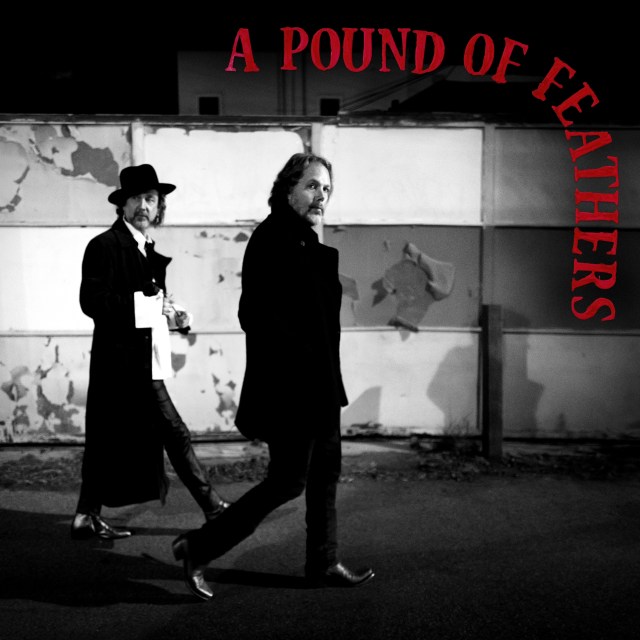
The Black Crowes new album A Pound of Feathers is due to release March 13th via the band’s own Silver Arrow Records label. Grab a copy on their site here and grab tickets to their upcoming shows here.