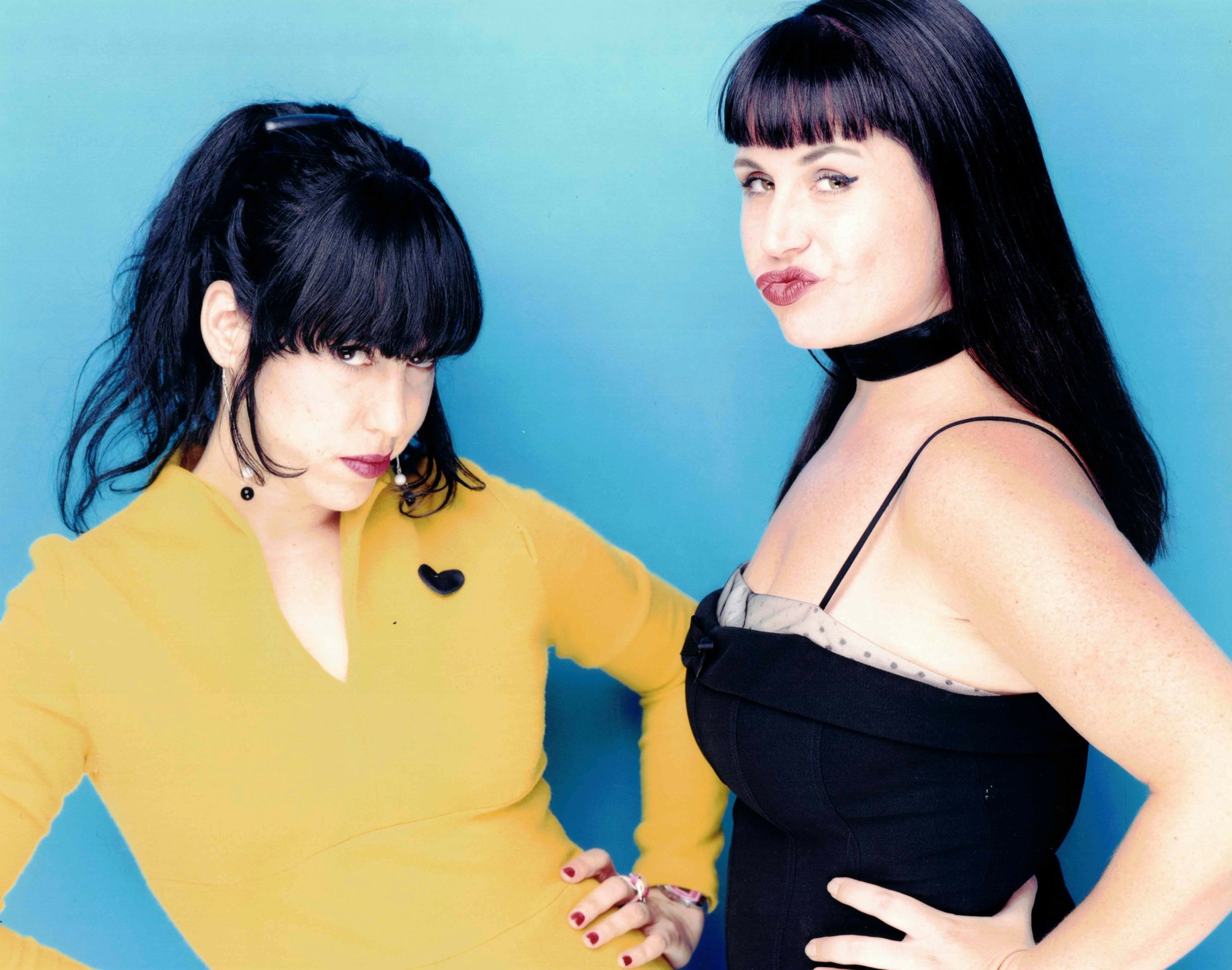
When Dance Hall Crashers disbanded (for a second time) in the early 2000s, most believed that the ska punk group had run its course and would just be a well-remembered part of the East Bay scene — much like the scene’s seminal stars, Operation Ivy, before them.
At the start of 2025, the band announced their return after more than two decades away, featuring major dates like Vans Warped Tour and Riot Fest (in addition to a smattering of headlining shows), but what no one expected was just how much Dance Hall Crashers’ popularity grew during their years off.
Following the modest success DHC had the first time around, the legacy of the ‘90s ska punk scene ebbed and flowed as the subgenre faded in and out of favor. But with each new generation of bands, Dance Hall Crashers’ impact grew even as the band remained on the sidelines.
Now that they’re industry veterans back playing shows exclusively on their own terms, Dance Hall Crashers is ready to bring their party to all who’ve missed them since 2004.
Hit Parader caught up with the band’s vocalists Elyse Rogers and Karina Deniké, as well as guitarist Jason Hammon, backstage to chat about
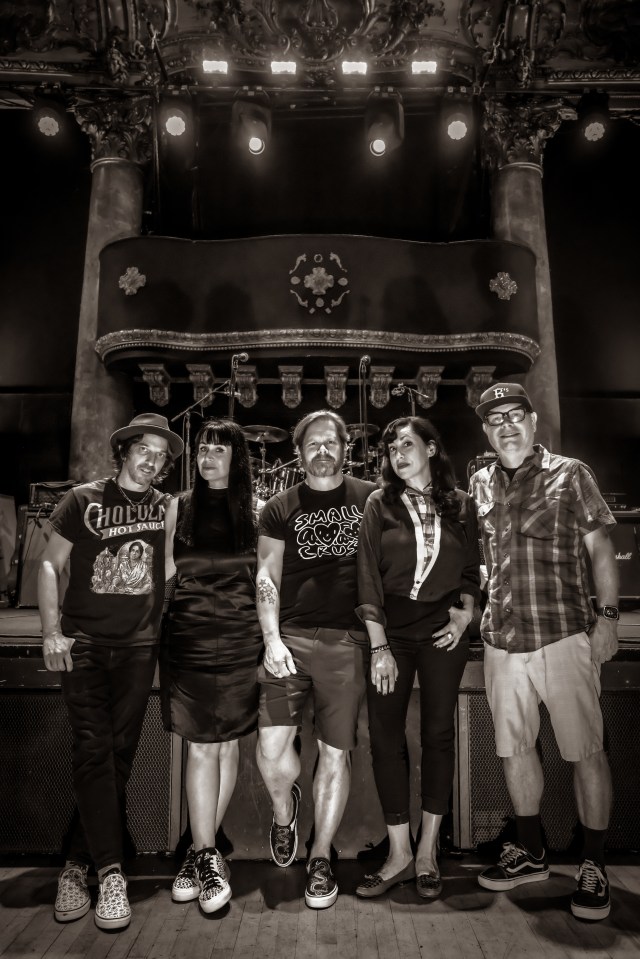
Hit Parader: It always seems like Dance Hall Crashers are having a tremendous amount of fun at every show. What goes into that chemistry night after night?
Elyse Rogers: Well, we actually all get along off the stage, too.
Jason Hammon: We actually do. It’s crazy.
Karina Deniké: I think if you’re going to spend the time to write and create fun music and take people out of their home environment for a stage show, you want it to be a place where you can have a good time. The world is crazy right now, and the news is often tough to listen to, so you want to provide a place where you can have fun and forget everything else for a minute — forget your normal life, work life or whatever it is. So to me, a stage show should be a fun, good experience, and that’s what I try to think about when we’re on stage. “Let’s make this really fun. Let’s all be here together — meaning everyone that’s at a festival or everyone that’s at a show of ours — and just enjoy ourselves. That is definitely an attitude that I try to bring to our shows.
HP: Speaking of those festival shows, when you go to a festival now after taking a couple of decades away from the scene, what’s it like to see the next generation of bands that grew up listening to you as kids?
Deniké: It’s great. I think it’s really fun.
Rogers: I think it’s super inspiring. I love to see bands like the Linda Lindas who are killing it. There are a bunch of younger bands who are not only just carrying the torch, but also doing their own thing with it. There are different issues that they have to deal with today that we never had to deal with, and I think it’s awesome. The music scene is thriving.
Deniké: And then we selfishly get to see our favorites at the festivals too, like Jawbreaker, Weezer and Green Day [all of whom played Riot Fest 2025].
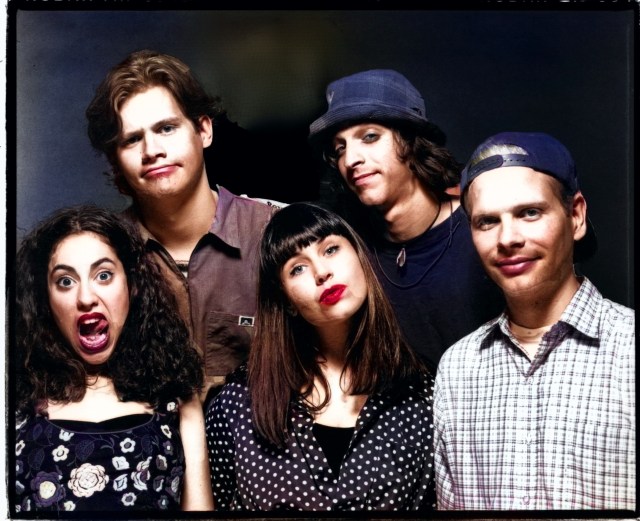
HP: Given the current divisive political climate throughout the world today, do you think it’s more important than ever for bands like Dance Hall Crashers to bring unity and joy to people through your shows?)
Hammon: I think so.
Deniké: I totally do. I think that I appreciate it more than I used to because things are really tough right now. Any kind of sense that we’re all in this together and reminding people that there are forces of good that are trying to keep us all together feels more special than it ever has before. [Dance Hall Crashers] shows and festivals do that specifically, and it makes it feel like every moment is special right now, which is not always how I felt.
Rogers: And I also think that just bringing levity to the world is so important at the moment, so we do our best to do that as well.
HP: Having come out of the ska punk scene of the ‘90s, what’s it been like to come back and be able to play with so many different subgenres of bands and fans?
Deniké: It’s fun. Sometimes we’re the kind of random odd man out — or odd woman out — but I think that’s a really good balance for us. Having us on a bill for [a big show or festival] brings something different. We’re a little of this and a little of that, and we try to bring a little bit of our influences to every set — and I think it works.
Hammon: We’re like the misfit toys anywhere we go. When people hear us, they know it’s us because there are not a lot of bands like us. We used to always be the odd ones out, because the ska scene was kind of sour on us at various times and we never really fit in anywhere else. Now, it’s like everybody is just really happy that we’re playing again. It’s really fun.
HP: How does it feel to see that reception from fans and the scene and industry to have Dance Hall Crashers back and seemingly bigger than ever before?
Deniké: I think it’s incredible. I mean, it’s exceeded any of our expectations of what that could possibly mean, and it’s been really beautiful.
Hammon: More than anything else, I think it’s been totally humbling for us.
HP: Now that Dance Hall Crashers is back, what kinds of things would you like to see the band new both in the immediate future and 5 or 10 years down the line?
Deniké: I think we’re really just taking it day by day. Our ethos right now is that if something sounds fun and we all want to do it, then we will. We’re not making plans beyond that, you know?
Dance Hall Crashers appear in our “What Does Punk Mean To You?”
article in Issue #1 of Hit Parader:
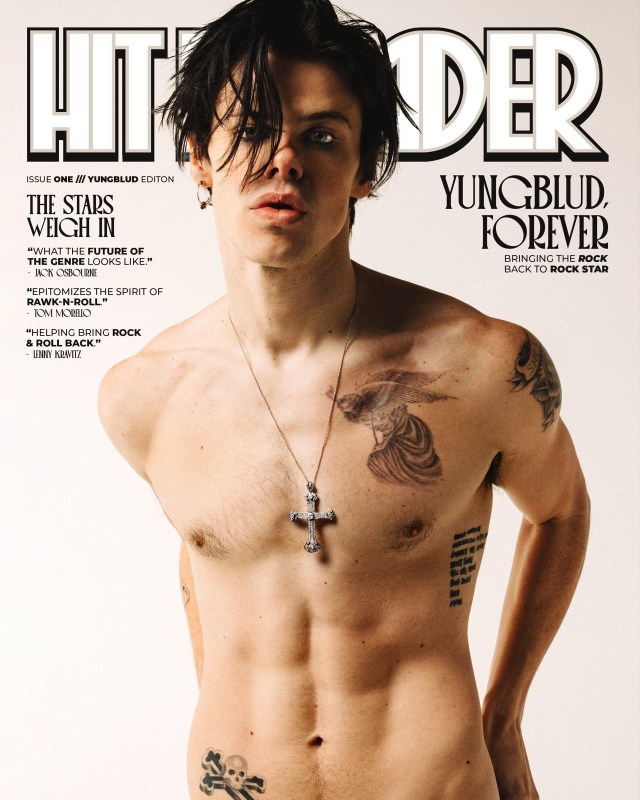
Hit Parader #1: Yungblud Edition
October 2025 — $12.99