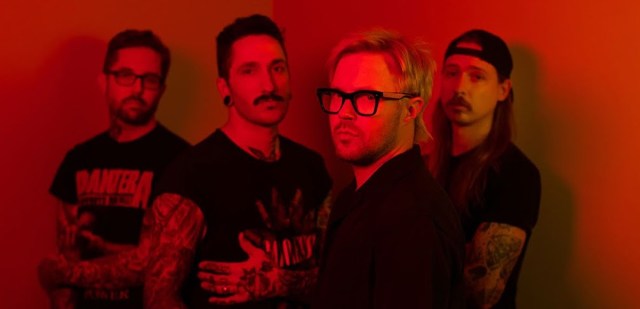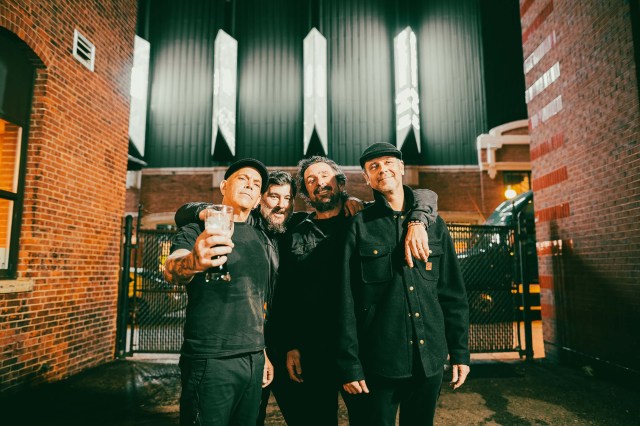
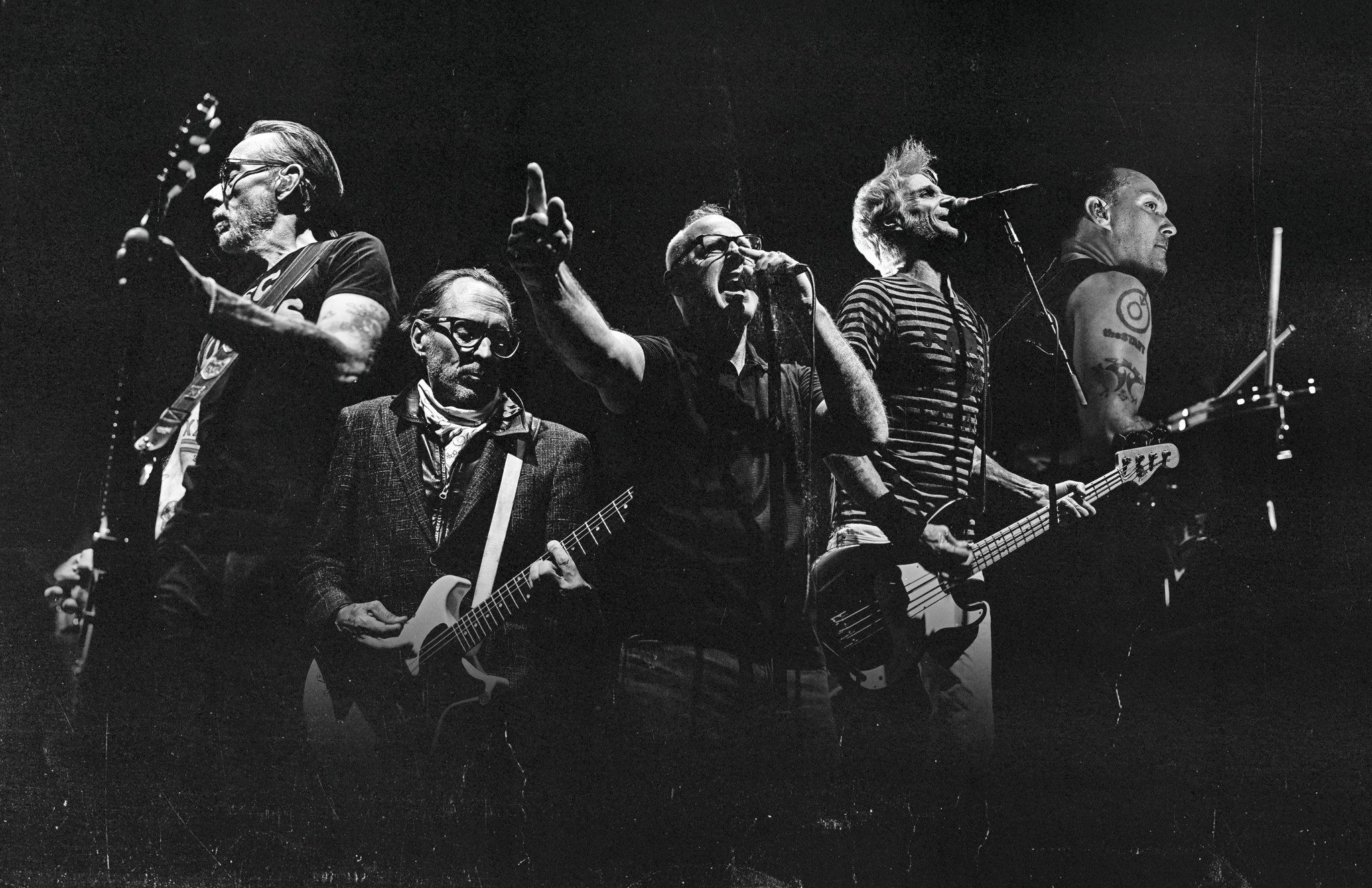
Bad Religion has been synonymous with punk rock for more than four decades now, yet the Los Angeles legends are still in pursuit of their perfect album.
With 17 albums across 37 years, most of the band’s supporters would say that at one point or another, the genre’s most thoughtful group hit perfection at least once or twice, but it’s the constant striving for greatness that has kept them together and relevant all these years later.
Hit Parader caught up with founding bassist Jay Bentley and drummer Jamie Miller backstage to chat about the band’s legacy, logo, and goals for the future.

Hit Parader: What is it about punk rock that makes it so multi-generational, where bands that you looked up to can play on the same shows as bands that look up to you?
Jay Bentley: Isn’t that how it’s supposed to be? That’s what a music scene should develop into. The most surprising part to me is the viability of this music as mainstream, which up until the ‘90s didn’t exist. Whether it was the advent of MTV or the success of Nirvana or the Vans Warped Tour, those things brought this culture out into the light and validated a lot of bands who had more to offer artistically than just a rock ‘n’ roll ethereal lifestyle with smoke and clouds and drugs. This is more attuned to folk music, and folk music hasn’t gone anywhere for hundreds of years. It’s just as valid as it’s ever been. Philosophically, the music isn’t just offering teen angst, but a direction for your teen angst that we could all sort of touch — which set everyone apart from the untouchable rock ‘n’ roll thing that other bands were offering.
Jamie Miller: Bands are like bugs. They’re not supposed to have a long lifespan. Generations before us, bands started that loved the Beatles, but they never got to play with or see the Beatles. Being a band that’s been around that long, maybe we were like the Beatles to one of these new bands, and now we get to see what we inspire and they get to see us.

HP: What do you think has kept Bad Religion not just together but relevant at the forefront of the scene for so long?
Bentley: Tenacity times naivety. We’re too stupid to quit. I refuse to quit, and you can’t make us stop. We’ll go when we damn well feel like it.
Miller: That, and there’s never a shortage of things to write about. The punk thing is sort of a generational lifestyle thing, too. You get your skateboard at 13, your Black Flag shirt, your Bad Religion patch, and you’re a punker now. It becomes a thing and it just keeps perpetuating, which is amazing.
Bentley: It’s the logo. The entire intention of the logo was to piss off our parents. We didn’t have an audience. We just had our parents going “Will you shut up?” Brett [Gurewitz] still says he drew it as a joke, and now we’re stuck with it forever. It worked out unintentionally.
HP: It feels like a lot of things for Bad Religion have just worked out unintentionally for decades now.
Bentley: Everything that’s worked out for us, has worked out unintentionally. When Jamie came into the band, he was the right tool for the job. When Brian [Baker] came into the band, he was the right tool for the job. You mesh with people in ways that are so much deeper than just musical, and those are the things that keep the band relevant. We’re moving forward by being like-minded. We don’t have irreconcilable differences. We had those in 1983 — and again in 1994 — but that difference was our immaturity in dealing with success. We just couldn’t deal with all of these things happening, so we went our separate ways, came back together and said
“We’re not doing that again.”
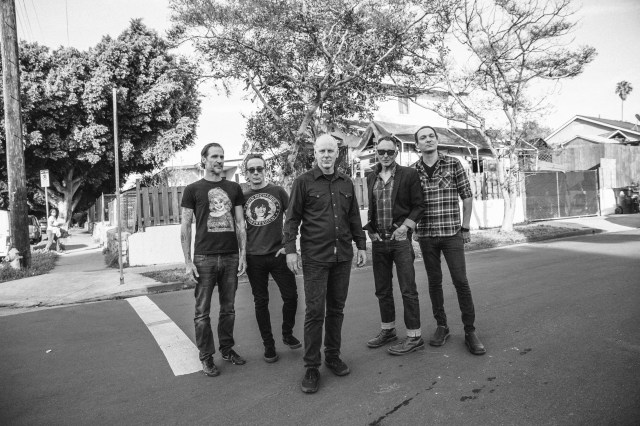
HP: Speaking of meshing with each other, what’s it like working and creating new music with the same people all these years later?
Bentley: It’s like playing poker with your friends on Wednesday night or going bowling with the guys in a league.
Miller: Bad Religion is really just our bowling league. That’s really all it is.
Bentley: The logo looks great on a bowling ball, by the way. But that cool hang is what keeps it fun, and we all want to pursue the next great thing. People ask us “What’s the best record you’ve ever made?” and hopefully, it’s the next one. Otherwise, what’s the point of making it? We all have that same philosophy. It doesn’t matter what we did in the past. If we make another record, it better be the best fucking record we’ve ever made.
HP: With such a huge discography and so many classic songs across different albums, how do you go about putting together a set list?
Bentley: It’s intimidating and liberating at the same time, because having all of those choices is really just a freedom that most bands will never understand. I’ve got 400 songs to choose from, and it scares the hell out of these guys when I show up with a set list.
Miller: I think there’s only been one time where he wrote a set list and I was like “I don’t even know what that song is. We’ve never practiced this!” He goes “It’s this song, you’ll figure it out. Just play a punk beat and there’s a 50-50 chance it’ll be right.”
Bentley: That’s pretty much it for every song. It’s 50-50 that we’re all going to start on the same note, but I guarantee you by the time we get to the chorus, we’re all playing the song.
HP: All these years later, is there anything left that you want to do with Bad Religion?
Miller: We want to win “Best New Artist” for the Grammys after 45 years. There’s still a chance. There’s no rule that says we can’t.
Bentley: That’s my goal. We should win “Best New Artist” and get a “Lifetime Achievement” award on the same night.
Miller: Then we put out an instrumental song and go for “Best Instrumental Band” to sweep the Grammys.
Bad Religion appears in our “What Does Punk Mean To You?”
article in Issue #1 of Hit Parader:
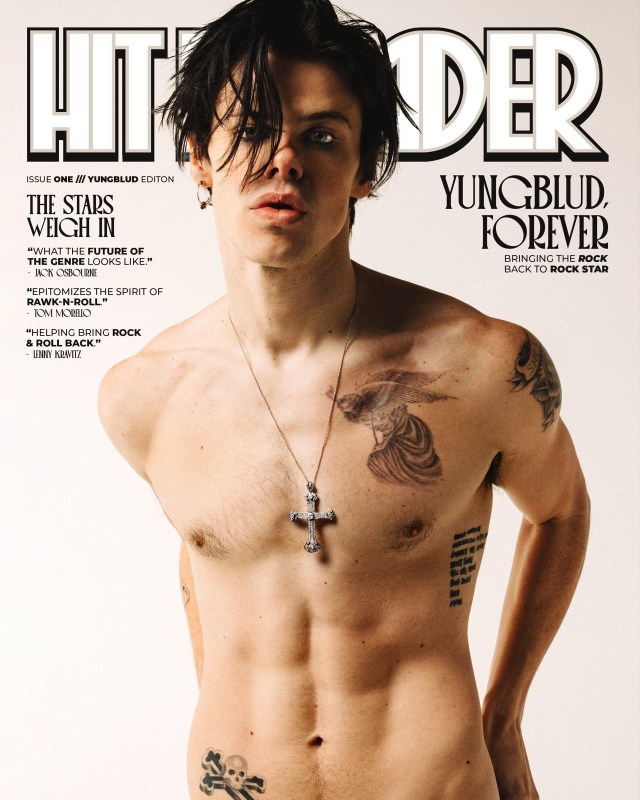
Hit Parader #1: Yungblud Edition
October 2025 — $12.99