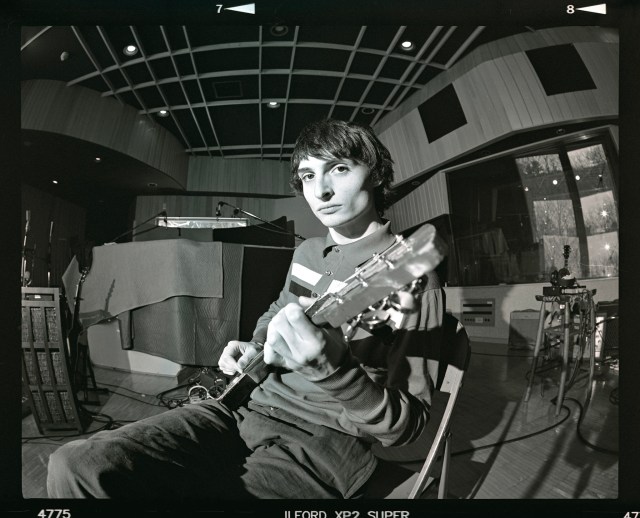
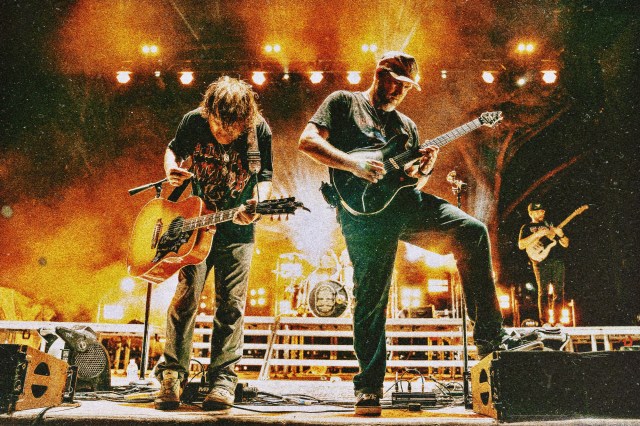
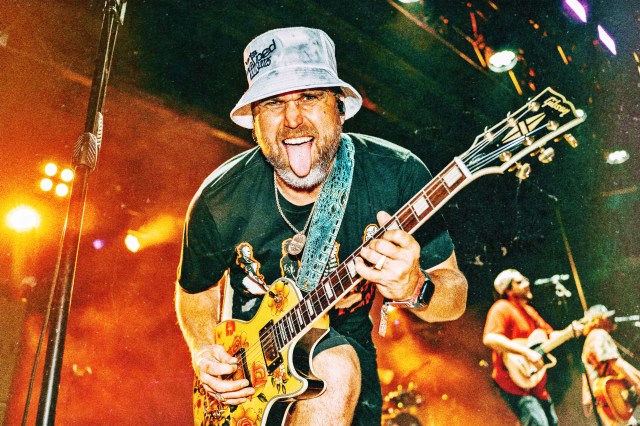
For Treaty Oak Revival, the road from West Texas has rarely been straightforward, but in hindsight, every detour and choice has led them to exactly where they belong, the spotlight. On first impression, one might peg them as just another country band, but TOR is known for one thing above all else — shattering labels and bending genres. Their sound — a fierce, energetic blend of punk, emo, country, and rock — has made waves, fueled by their reputation for raucous live performances that leave audiences buzzing.
It’s not every day you get the chance to sit down with one of the wildest independent rock bands of the 21st century. Treaty Oak Revival has carved their own path, stayed true to their roots, and never strayed from what their music means to them — a dedication that comes through in every note.
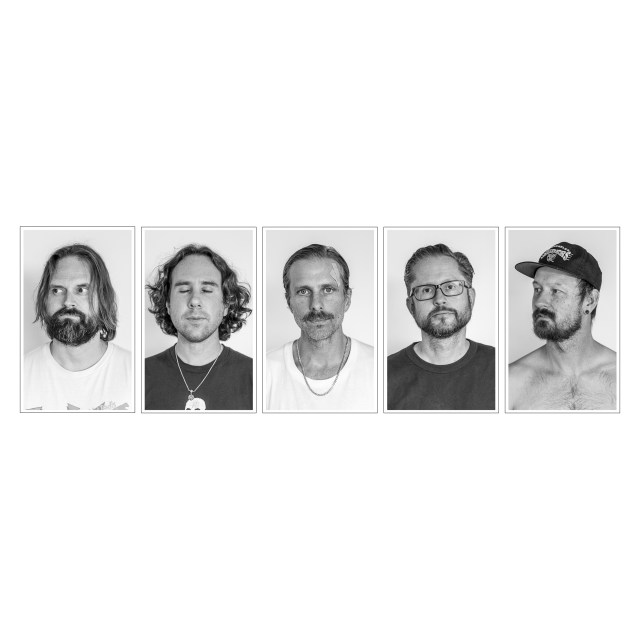
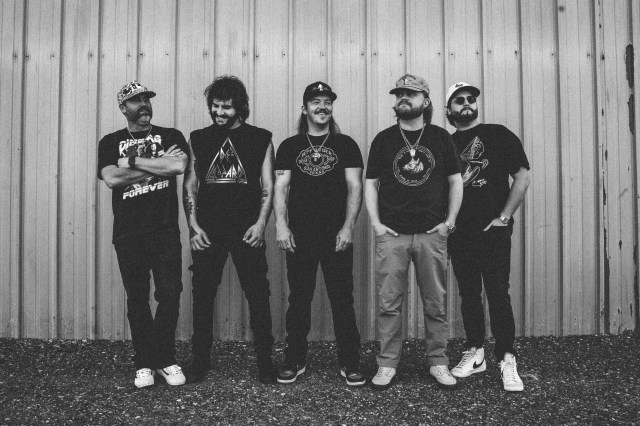
The band consists of Sam Canty (lead vocals/acoustic guitar), Jeremiah Vanley (lead guitar), Lance Vanley (rhythm guitar/background vocals), Dakota Hernandez (bassist), and Cody Holloway (drums). Writing music is a deeply collaborative process for them, something that’s on full display in their latest LP, West Texas Degenerate, released in November of last year.
Hit Parader had the privilege of sitting down with Sam, Jeremiah, and Lance to discuss everything from their past year to their upbringing, and of course, West Texas Degenerate.
Read the full interview with Treaty Oak Revival in issue #3 of Hit Parader below:

Hit Parader #3: Zedd Edition
February 2026 — $12.99
Hit Parader: How has this year felt for you so far, and were there any moments along the way that really stood out?
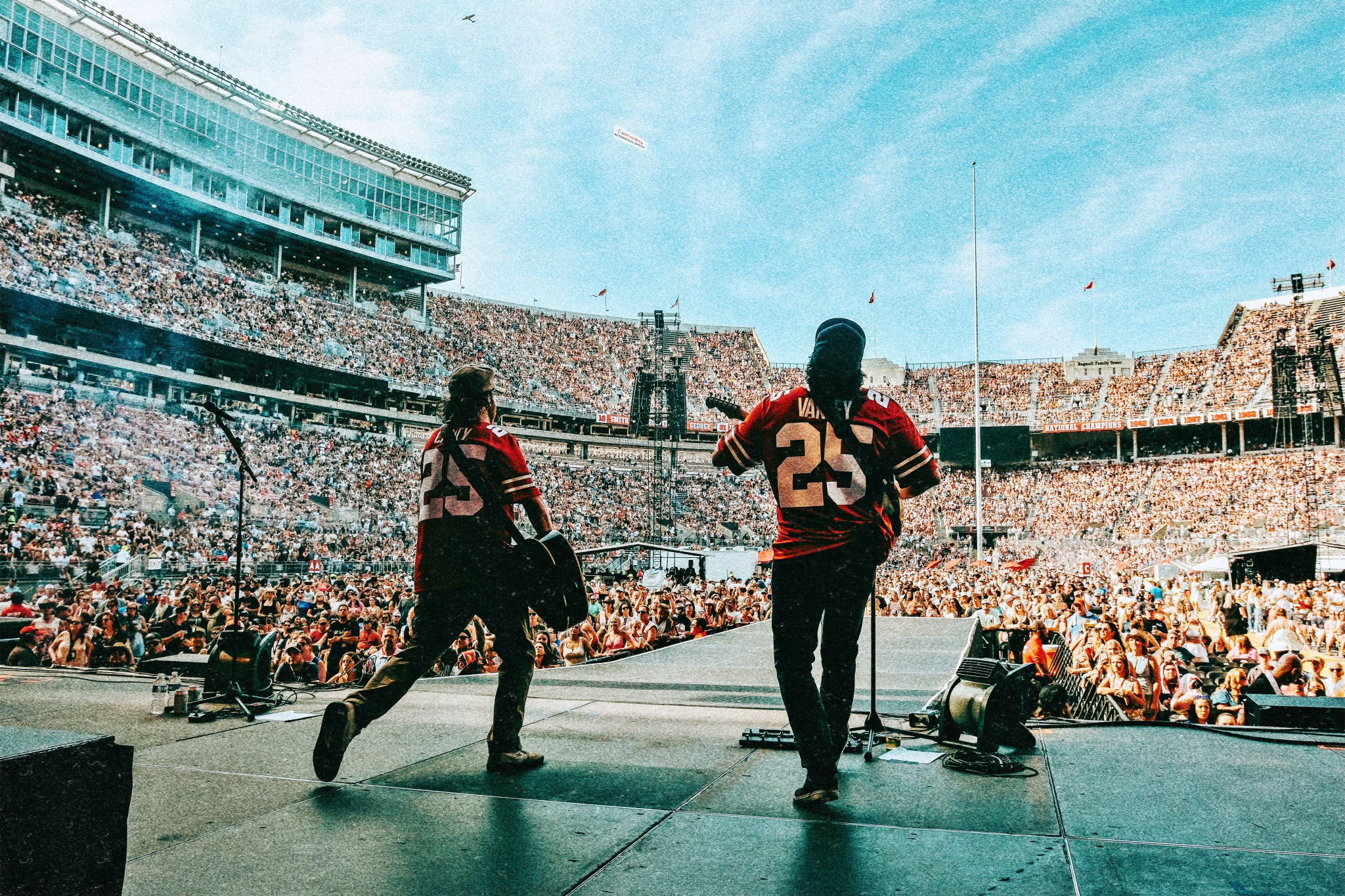
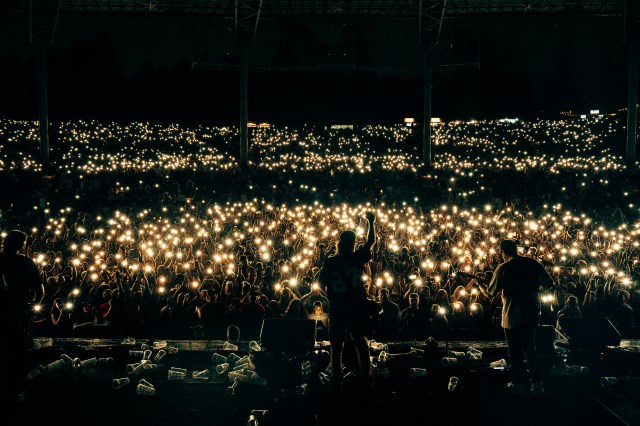
Sam Canty: I think we figured it out, we did the math; by the end of this year, we will have sold over 280,000 tickets. I think that’s right now, right? A bit closer to 400,000 by the end of the year, probably. We got seven gold records this year and one platinum record. I think our platinum is about to go double platinum. We’ve been playing arenas and amphitheaters all around the country, selling out places, doing fundraising events, and raising money for charity. This year, we raised a good bit for the Kerr County Flood Relief Foundation in Texas to help with all the floods going on there. We’ve got some Christmas shows coming up with toy drives, so we can give back to those kids. Yeah, and we play the Opry in a couple of weeks.
Jeremiah Vanley: It’s been a stellar year, a record year for growth for us, 100%.
SC: We just came out with our acoustic record, and we’re about to release the new record in a few weeks, so it’s coming up quick.
HP: We’ll get into the new record in a minute, but first — doing all of this independently and still finding ways to give back along the way has to feel pretty surreal. What’s that experience been like for you?
JV: It’s amazing to have the kind of team that we have. We all work so well together. We’re like a big family, everybody does what they’re supposed to be doing. We have the best people working for us, and that helps a lot as we grow independently, rather than going the whole record label route.
SC: Yeah, we did have a run-in with a record label this year as well, but we’re back to doing it on our own now, and things are going really smoothly. We went and built ourselves a badass team, added some more people to the family. Everything’s been running smoothly. Everyone’s happy, things are going well. We’re stoked to be doing all this cool stuff on our own.
JV: Very blessed this year, for sure. We want to keep this growth going next year and beyond. As we release more records and songs, we just want to see our fan base grow like crazy.
HP: Growing up in Odessa and West Texas more broadly, what parts of that upbringing — and that small-town environment — most shaped the way you see the world and what you bring into the band?
SC: A lot of it comes down to work ethic and treating this like a business. That’s how we’ve always done it; very business-oriented, working hard, achieving a lot in a short time without sacrificing quality. And being from West Texas, and being from a small town, we’ve always had that sense of community in our lives growing up. Most of us are from the same town, and that family vibe we’ve lived with all our lives is truly the heart of this band. Everyone who’s joined us [on tour] has said that it’s a big family, it’s chill and cool, and everyone’s nice. It allows everyone to be a part of it and to enjoy the experience. Most of the time, it doesn’t even feel like work.
JV: It’s life-changing for a lot of people on our crew, especially those who’ve been in the industry 20 years. They come into our thing and say, “Wow, this is a complete 180 from how the whole industry works.”
HP: You’ve always encouraged fans to really cut loose at your shows and be part of the chaos. There was a moment a while back where things maybe tipped a little too far — so why is it still so important for you to create a space where people can fully let go and rage together?
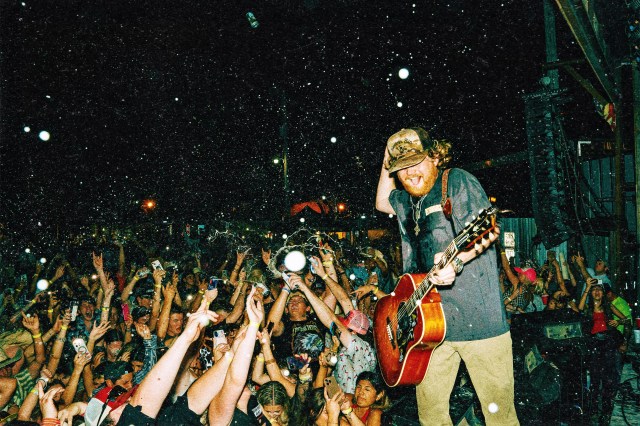
SC: It’s the kind of environment we grew up in, going to concerts, at least for me when I was young. The first rock concert I ever went to was Papa Roach and Chevelle. I remember I was 15 years old, and thought I got a concussion because I didn’t know about crowd surfers until one got dropped on my fuckin’ head. After that, after getting knocked in the noggin, I learned to expect the chaos and to enjoy it. I was like, Alright, this is part of the fun. I just need to be more aware of my surroundings when I’m doing this. And so from then on, I would crowd surf, or I’d help other people crowd surf, and then, I’d go to country concerts where we come from. And in Lubbock, Odessa, Midland, the West Texas area, it was common practice back in the day. We used to have a festival called Crudefest where we grew up. It’s no longer a festival anymore, because I guess West Texas just isn’t meant to have a festival [laughs]. But it was always common practice to, you know, crack a beer, sling it over your head, throw it on the ground, and jump around and have fun and rage with your friends and have a good time. We wanted our shows to have that same kind of energy. You can hear the songs at home, but if you’re spending your hard-earned money, we want to give you a show that you leave saying, “That was the craziest shit I’ve ever seen in my life.”
Lance Vanley: Same here. When I was 15 or 16, I went to a small venue in West Texas called the Pine Box; it was just pop-punk, hardcore, metal bands, all that. Being part of that scene meant being in the pit, getting thrown around; it was part of the experience. Yeah, I can go listen to this record at home, but you can’t mosh at home.
SC: I mean, you can, but it’s weird [laughs].
LV: Yeah, but it doesn’t come out to the same effect of being in the pit and that energy just flowing. Like, you know, we have some songs, you know, like “Boomtown” where they’re moshing, but we just have other songs where you see people just grabbing onto their person next to them, and they’re just singing the song and screaming the words at each other. It’s the energy that flows through the crowd, the physical connection, the emotion, the chaos; it’s communal.
SC: As far as what happened to me recently, it wasn’t the first time something like that had happened, but it was the first time it got caught that well on camera. Stuff like that happens once in a blue moon, but not often. It’s when it starts happening every show that it’s like, ‘Okay, y’all don’t understand what we’re trying to go for here.’ That’s not really the goal, to just chuck shit at us, but the goal is to do stuff that’s spontaneous. And as far as beer showering or moshing or crowd surfing or forming a pit, yeah.
LV: Yeah, that came out of nowhere.
JV: People in Connecticut can be wild too, you know [laughs].
SC: For sure. But the thing is, a lot of these are young kids coming into the scene at their first concert. They’ve only seen what’s online and don’t know concert etiquette yet. After a few shows, I feel like the more experience they get, they’re gonna come back and know that that’s not a cool thing to do, you know. We remind fans during “Boomtown” to look out for each other; if someone gets knocked down, pick them up. It’s typical hardcore show rules. Sometimes you’ve just got to remind the fans of that.

HP: I grew up around hardcore shows, where there’s that unspoken rule: you go hard, but you look out for each other. If someone goes down, you pick them back up. That same sense of community feels present at your shows — does that parallel resonate with you?
SC: Yeah, man
HP: West Texas Degenerate just dropped — congrats. There’s a clear evolution in how you’re blending country roots with punk energy this time around. As that sound has developed, have your sources of inspiration stayed the same, or have they shifted alongside it?
SC: I think it’s a little bit of both. It kind of really depends on what we’re going for. With this record, one of the things we were looking at was growth, both in sound and the content of the music and the lyrics. I wanted to tell a story through the record of going from your youth through your 20s into your early 30s, which is kind of where we’re all at in life, aside from Jeremiah. But, I mean, hell, he’s lived through it, so he knows what it’s about. When writing that record, I was listening to a lot of bands that I listened to growing up, in high school and college, and throughout post-grad life. A lot of Lucero and Lynyrd Skynyrd and Drive-By Truckers, Turnpike Troubadours, Whiskey Myers, Reckless Kelly, those guys. Just a lot of Texas country bands, some Blink 182 and Sum 41, Simple Plan, and A Day to Remember, metalcore, just trying to get all those boxes; some southern rock, some pop punk, some metalcore, some Texas country, and try to fuse it into one, which is kind of what our music is anyway. I think we just really leaned into the style that we had on Have a Nice Day, but we also took the experimental aspect that we had on No Vacancy and applied it to this record as well. We were still playing our sound that we’ve really liked lately, but we were also trying different things with that sound and seeing how they came out. I think they turned out pretty well.
HP: One thing that really jumps out is how raw this record feels compared to the last few. Was that rougher, more immediate feeling something you were consciously chasing?
SC: That was one of the things we were really worried about. We’re always worried about our records, whether it’s overproduced, polished, or clean. We definitely like a little grunge and muddy aspect to it.
HP: Walk me through the recording process a bit — and along the way, were there any songs or themes that changed significantly from the demo stage to the finished versions?
SC: Well, what we first did was we were trying to complete Talco Tapes. We finished Talco Tapes early, so while we were there, we had a few extra days. We had a couple of songs from this record that we already had lined up and ready to go. Obviously, we already had “Bad State of Mind” and “Happy Face” in the can, already done. I think we did a couple more; We did “Blue Star”, “Withdrawals” and “Stay a While” those two days. It started out with just, me sending demos to them, just me singing with an acoustic guitar playing melody, and we all got in the studio, in the live room, and basically built the song up right there in the live room. That proved to be a longer process than we really wanted it to be. So we got done with those three songs, so at least we had those done. Then the next time we went into the studio, before we went, we rented out this place called the Platinum Music Complex, in North Richland Hills, in the DFW area of Texas. We took the rest of the songs and spent four days in that complex, just going over the songs and building them from the ground up and getting them how we wanted them, kind of like we had it now.
LV: Our preferred method of going into the studio to record is that we’ve already done the pre-production. We don’t want to go in there and spend five to six hours writing and finishing the song. Within those five or six hours, we might have been done recording it if we had just taken the time ahead and done that. Even to go back to answer your original question, I would say, “Sunflower” probably changed the most from the original demo. The second closest would be “Naders,” because the vocal element was completely different before we ended up going back. Maybe a week before we went back to the studio, Sam and I were talking, and it was like, it’s boring, they’re not very entertaining. We reworked the entire melody and harmony section so that we didn’t have to change any of the instrumentation. So it was like, boom, did that. Outside of that, everything else was pretty much from that pre-production stage, where we were able to rehearse, outside of dialing in what tones, specifically for those songs. A lot of it was basically in that pre-production.
HP: I’ve heard the story about the writer at Two Step Inn and how the album title came into focus, but I’d love to hear it directly from you. When did West Texas Degeneratelock in as the name, and what made it feel right?
SC: As far as the name being for the album, every time we talked about that song, everyone was like, that’s a really cool name. We had been trying to figure out the name of this record. I was, like, pulling lines from the songs and all sorts of stuff, and I just couldn’t really figure it out. The story behind “West Texas Degenerate” is I always wanted to write a follow-up to our “Boomtown” song, but kind of – not sure if it’s a prequel or a sequel or an offshoot – but kind of something in that same vein of telling another story about working life in Odessa, Texas, and the surrounding Ector County area. I had that one hook and hook line in the chorus, “West Texas Degenerate,” because I could hear people singing that back in the crowd. I said, ‘I don’t know how to finish this or how to get this started, and I need somebody to help me.’ I thought of the song “Ringling Road” by William Clark Green. He’s one of my favorite singer-songwriters out of Texas, in the Texas country music scene. We used to cover him back in the day when we were just playing small bar gigs. He’s always been an inspiration for me in songwriting and in Texas country. We had a relationship built with him through his festival, Cotton Fest in Lubbock, Texas. He had us headline it that year, so I hit him up on social media and said, ‘Hey man, would you ever consider writing a song with one of us?’ He said, ‘Oh, hell yeah, absolutely.’ I asked how he wanted to do this, he said, “Man, let’s just go to Billy Bob’s in Fort Worth”, the largest Honky Tonk in Texas. “I can rent the green room out in the back and just come meet me there, and we’ll see what we can do.” We met up there and wrote the song in about an hour and a half, and we were done, and we’re really happy with it. Will was like, “Man, that song is badass, dude. I can’t believe we wrote it so quickly, too. If you want to, you don’t have to, but I would like to be on it.” I said, “Oh, hell yeah, man, we have to get you on the song.” To be able to write a song with a guy I really look up to, have him on the track with me, was kind of a surreal moment. I’m happy that song’s on the record, I’m happy it’s the title. I think it paints a perfect picture of the life we live and where we come from.
HP: “Withdraw” is such a heavy and important moment on the album, especially given the kinds of jobs and environments you came from — places where addiction is often a reality. How did your personal experiences shape that song, and what does it mean to tell that story from lived experience rather than observation?
SC: Yeah, I had a pretty bad relationship with alcohol, or a bad and good relationship with alcohol, for about 10 years. The last five years that I was drinking, it was pretty rough, and I would say I was a full-blown alcoholic at that point. Kept it on me at all times, drinking at all hours of the day. It finally got to the point where I decided to quit, and I decided to try to do it cold turkey. Well, if you’ve been drinking a handle every three days or a fifth every night of whiskey for a solid 10 years, you can’t just quit that cold turkey. After the first couple of days of withdrawal symptoms, shakes, nausea, and vomiting. On the third day, I started having what’s called delirium tremens, or DTs. I was seeing things as clear as you and me, and they weren’t there. It’s pretty terrifying shit.
JV: Yeah, I drove Sam around a few times, and he was literally out of it. He was seeing things. I was like, “Hey, let me call your mom and dad real fast. We’ll go over there and hang out for a little bit.”
SC: Yeah, there were times where some of the stuff I was seeing, and I was in fear for my life, but that was just my brain trying to shock my heart. I wound up getting admitted to the hospital, and they were like, “Yeah, if you hadn’t come in when you did, you probably would have gone into cardiac arrest.” So I dried out in the hospital, got out on Easter, and then two weeks later, I was drinking beer again and started going back down the cycle. I wound up meeting my wife and moving to Oklahoma, and still doing the band stuff. But it got to a point where even my wife, my girlfriend at the time, was like, “I’m out of here, this relationship’s over.” It was starting to look like the relationship was over for a lot more than just her. The relationship with my band wasn’t very good; I wasn’t doing well at shows; I was forgetting lyrics and just walking off stage, too drunk to perform. My relationship with my family was suffering from it. I decided that it was time to never do it again. As of last September, I’m three years sober off alcohol, and that song was just kind of a nod to that time of experiencing all that stuff and going through that. Hopefully, it helps put into perspective what that kind of stuff can do for other people, and maybe they don’t have to experience the same things.
HP: On the other end of the spectrum, tell me about “Sunflower.” How did that song come together, and what did it bring to the album that made it feel essential?
SC:I wrote that song as a wedding present to my wife because she always told me I never wrote any songs about her, like all the songs are always about different girls, and stuff like that. I was like, “Alright, you won,” so I wrote that two days before I got married or was about to get married to her. There was another song I’d written that was kind of a similar love song, but it just didn’t fit anymore. This one, I felt, was a really good song. I like the wordplay, everything about it. I always wanted Treaty Oak [Revival] to at least have one love song, one kind of wedding song. I originally didn’t want the song to be on the record because it was a gift to my wife, so it wasn’t really my song to give, but the guys seemed to really like it. Our producer really liked it. Everyone enjoyed the song. I talked to my wife about it, and she said, “Use it, but definitely make sure it sounds badass. If you’re going to do it, do it right.” It took us a while to dial it in, and I think it’s about as dialed in as it’s going to get on that record.
HP: Beautiful track, and I’m glad that it made it in.
SC: Me too, with a great low point in the record for everybody to kind of calm down.
HP: There’s a lot of weight on this record, so moments of contrast really stand out. On “Sweet With Misery,” the metaphor of a mercy killing to describe the end of a relationship is incredibly striking. What drew you to that idea as a way of expressing that feeling?
SC: I don’t know. I wrote it with a guy named Gary Stanton. He and I are both big hunters. When I wrote it, I was probably in a fight with my wife or something, but I always remember that feeling where she’s mad at you, could possibly break up with you, but she’s not doing it, or she’s not telling you, and it’s just about that miserable feeling of waiting for it to happen and it just never comes. I thought that would be a cool thing to write about, while also alluding to the hunting aspect of where we come from. I thought it was a fun song. Gary’s a great songwriter, Muscadine Bloodline is a great band, and we’re really fond of them. Those guys have always been really good to us. Gary’s such a good writer, he worked so well with me. I was happy we made that song, and very happy that we were able to get them on that song with us. It’s one of my favorite songs on the record. When you go into writing songs like that, you don’t go into it thinking it’s going to be this powerful message or anything. It’s just one of those ones we thought was a really fun song, fun to play. I thought the concept was kind of humorous, kind of fun. Well, it can be subjective. It can be whatever you want. To me, it was kind of a fun song.
HP: Zooming out for a second — if listeners walk away from West Texas Degenerate with one core feeling or takeaway, what do you hope that is?
LV: I would say, like, this is who we are. To me, this record sounds the most like us, out of any music we’ve put out. When I hear these songs, I’m like, “That’s us, that’s what I wanted it to sound like.”
SC: Yeah, I would say the main point of this record is: this is who we are, this is what we sound like, this is where we come from, we’re not ashamed of it, and we’re here to stay. We haven’t forgotten where we come from. In fact, where we come from makes us who we are as a band. The main point of the record is, maybe the place you’re from isn’t the greatest place on earth, but it’s still your hometown, and you still gotta have pride in where you’re from and the people who got you there, especially, because we have a lot of people to thank from where we come from. They’re the reason why we’re here. We like to bring a little bit of West Texas to the world. That’s what we’re trying to do.
HP: If you had to point to one song that best embodies that feeling — knowing it’s like picking a favorite kid — which track would it be, and why?
SC: I think just the title track itself really explains it the best. You could say the same for “Stay a While” or “Port A.” Those songs are about that environment as well. “Port A” was more of a South Texas song about where I went to college. I would say “West Texas Degenerate” probably is the best conveyor of that feeling.
HP: To close things out, is there anything else you’d like fans to know as they spend time with this record?
SC: I mean, this whole record, we make every record for our fans, with our fans in mind. Make sure to listen to the intro and outro. Those are some of our favorite parts of the record.
JV: Hey, the outro is gonna go Gold. [laughs]
SC: Looking forward to upping the production and upping the ante next year. As far as touring goes, playing some bigger venues, a little bit more thought put into some stage production, maybe some props and stuff. Looking forward to playing these new songs out on the road next year and the rest of this year when the record comes out. We’re ready to see everybody.
Read the full interview with Treaty Oak Revival in issue #3 of Hit Parader below:
Hit Parader #3: Zedd Edition
February 2026 — $12.99