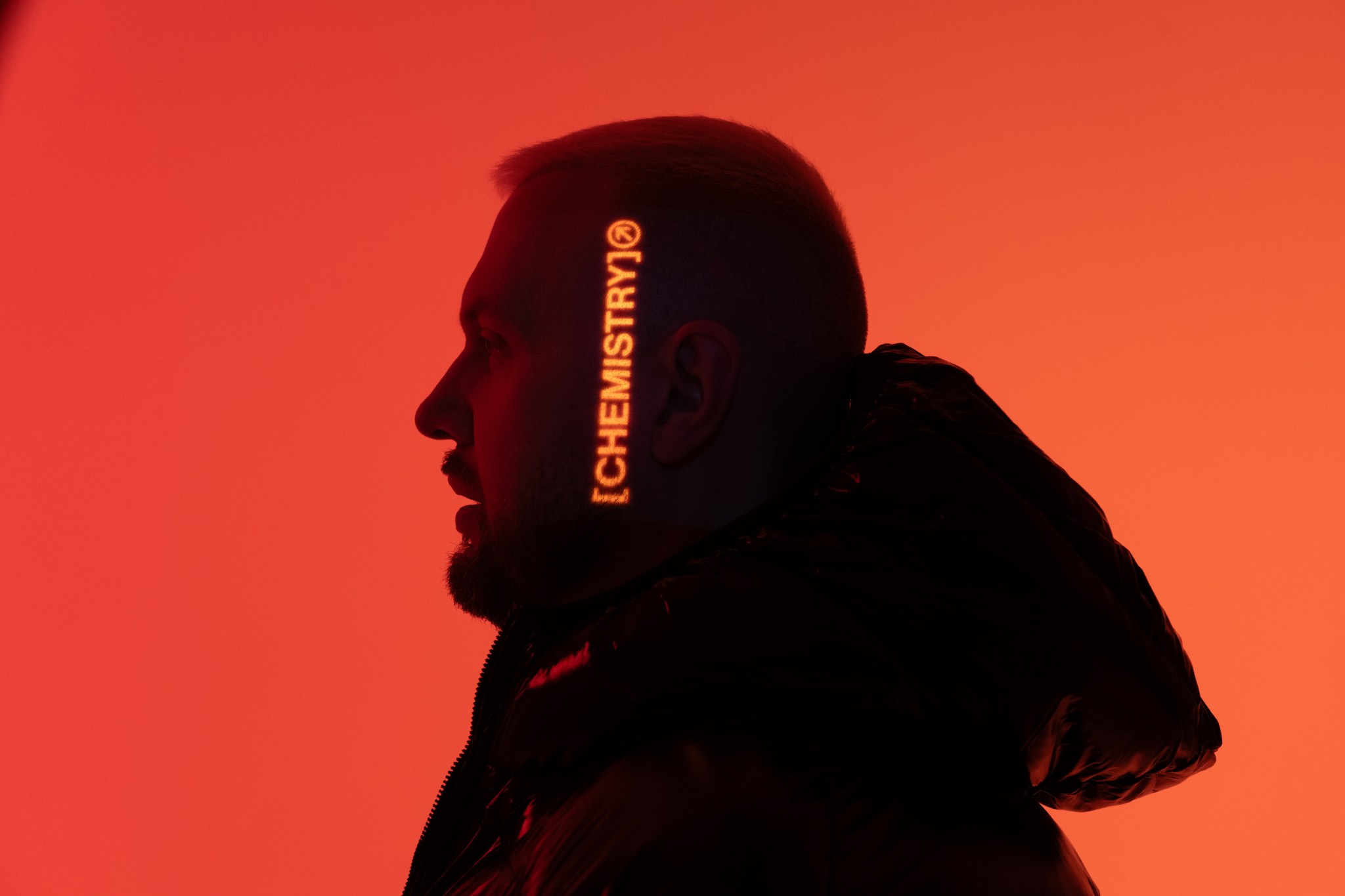
When thinking of the EDM sphere, no name has been more quintessential to the modern foundation and evolution of UK house music than Chris Lake. From starting his career working on his craft solely on a laptop, while simultaneously working for the Royal Mail service, to headline slots at the largest festivals in the world, his growth was never linear or conformed, rather it stemmed from one thing: pure unwavered passion and determination. This passion for making music that he loves to make is most apparent on his debut genre-bending full-length record, 20 years in the making, Chemistry. Sitting down with Hit Parader after Chemistry cemented his determination to creative evolution, and his remix of The Chemical Brothers track “Galvanize” receiving a GRAMMY nomination, we talked about everything from the production of the record, the sociolinguistics of genre names, the GRAMMY organization in regards to electronic music, and everything in between.

Hit Parader: Zooming out a bit, how has this year felt overall? What have you been most immersed in creatively or personally?
Chris Lake: It’s been a busy one. The year’s really been dominated and kind of worked around my album. I released my album called Chemistry, and, yeah, it’s a big deal [laughs]. There’s a lot of work, a lot of preparation, a lot of planning and implementation. For me in particular, me and my team chose to self-release. Self-release(ing) doesn’t obviously mean just me alone, going “Click!” and everything happens. I had to build a team. The team was quite big and extensive, but it’s a lot of work to make sure the left hand knows what the right hand is doing. That’s part of the challenge and part of the reward. That really has dominated not just this year, but the last two years, planning to actually release this album, and then everything else really fitted around it. Including the shows, there were a lot of shows, other releases. There were other songs that I did that weren’t on the Chemistry project, remixes, loads of stuff. It’s been an intense year. If you actually meet my team, one year has passed, but on their face, twenty years have passed [laughs], but they’re smiling. I think? [laughs]
HP: It’s good to be doing more than less, right?
CL: Listen, I’m very fortunate to have been doing this for a long time and enjoying every minute of it. I feel like I still have the attitude of a fifteen-year-old that was learning how to use a synthesizer, making beats, and just trying to make something cool. I still feel like the same person, just with a little bit more experience. So it’s nice. It keeps me young even though I don’t look it.

HP: That’s awesome. How did releasing the full length project rather than singles alter the production process, and how did releasing an album allow for more experimentation?
CL: Predominantly in my career, I’ve done singles; that’s been my main focus. That still gives me loads of freedom. I just try to make a banger, something fun that will grab people’s attention, my attention, really. The difference with the album was, it’s difficult to explain what’s different. Obviously, you have the consideration of how each song relates to each other, how the body of work feels together. There are mix considerations that change how you approach the mix of one song; you’re thinking about mixes in relation to the other fourteen tracks, there are fifteen on the album, and that’s one consideration. But whilst it is a consideration, it’s not the main thing that drives every decision. The main part of that album for me was just a representation; I don’t even think this is actually going to make much sense or be that important to anyone, but I had a small vision of how I wanted to grow as an artist. I had a vision of what energy I wanted to put into my approach to making the music, and it’s only small changes, but it made a profound difference to me. The album felt like a bit of an experimentation with my own technique in the studio. Thinking back to where I started and where I am now, it’s left me feeling like a more complete producer and songwriter, songmaker. Not that that would mean anything to anyone else; it’s a deeply personal thing for me. That was what I wanted to do.
Part of that process was changing the way I started writing songs by being even more open to collaboration. I’ve never had a problem with collaboration, but leading with it, involving specific items of songs, whether it be a guitarist or whatever, rather than always trying to get the best person working on that sound and trying to do that from the start to make everything more collaborative. There were a lot of people involved in writing these songs, so what ended up happening was that the experience was both a learning curve for me, but I also had fantastic days, weeks, and months working with great, talented people. Looking back, I loved making it, putting it together, conceptualizing it. Then right afterwards, I loved releasing it and figuring out how to put it out to the world, which is the stage that normally would be handed over to the big corporation [laughs]. I got to enjoy every moment of it.
HP: That’s amazing. And with the production process, these days it’s so much easier to just grab a Splice loop and put a guitar on there. It’s cool that you outsourced the musicians and put a human touch to the loops, in a sense.
CL: There’s benefits to being around the scene a long time. I want to make my own sounds, don’t get me wrong. I’m not against Splice; I think it’s a fantastic tool. At the end of the day, it’s an extension of what’s been available for as long as I’ve been making music. It’s one collection of many many sound libraries that makes it easier for people. But it’s so good, so quick, and so accessible that it’s easily exploitable. It’s the same as writing an essay. You can type in a prompt and get it written out for you. It will be fine, but depending on the application, it’s not necessarily going to be as good as coming directly from here [points to his head].
Read the full interview with Chris Lake in Issue 3 of Hit Parader:

Hit Parader #3: Zedd
February 2026 — $12.99